

With the Participation of Several International Missions… Maat Holds a Panel Discussion on the Sidelines of the CSP12
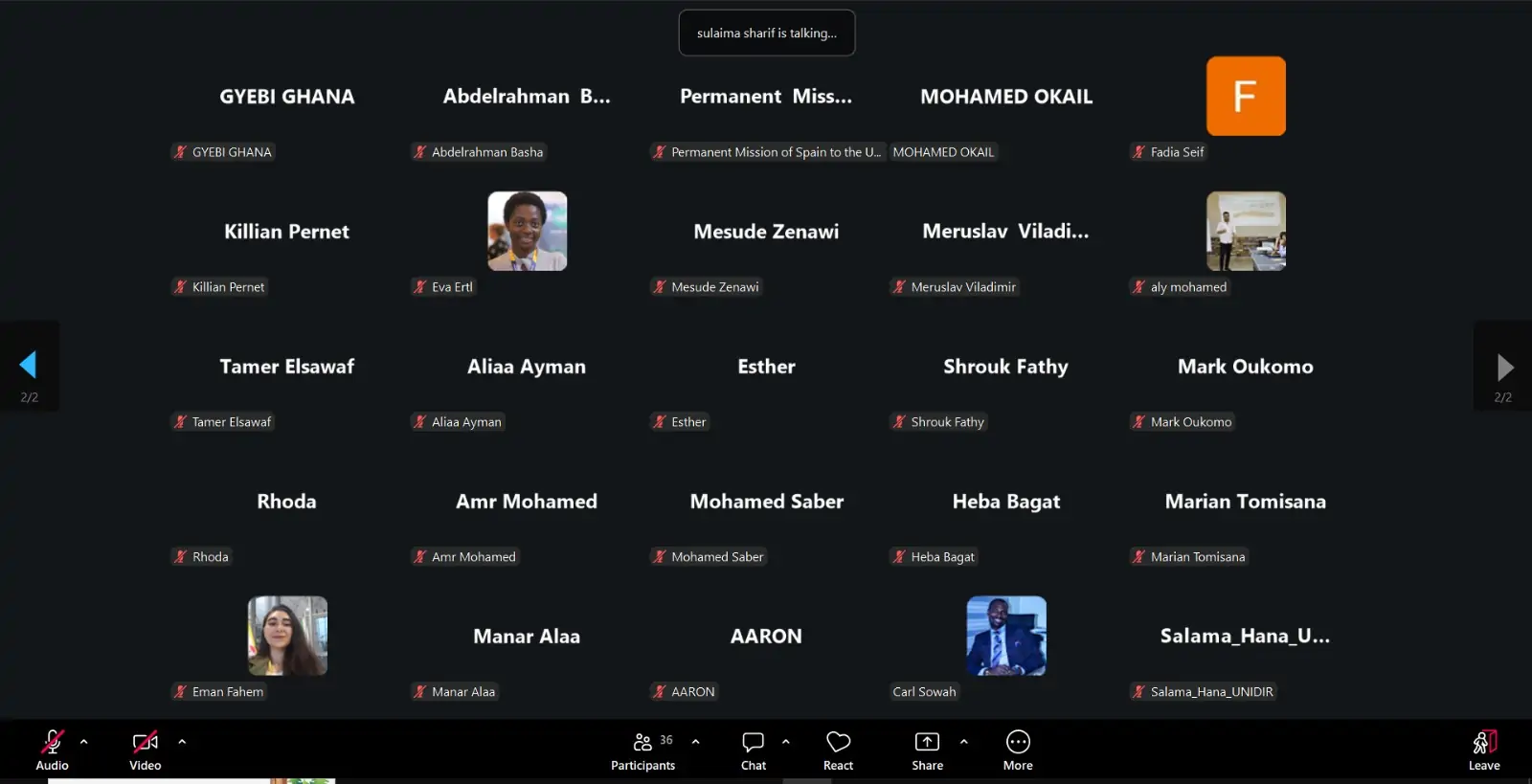
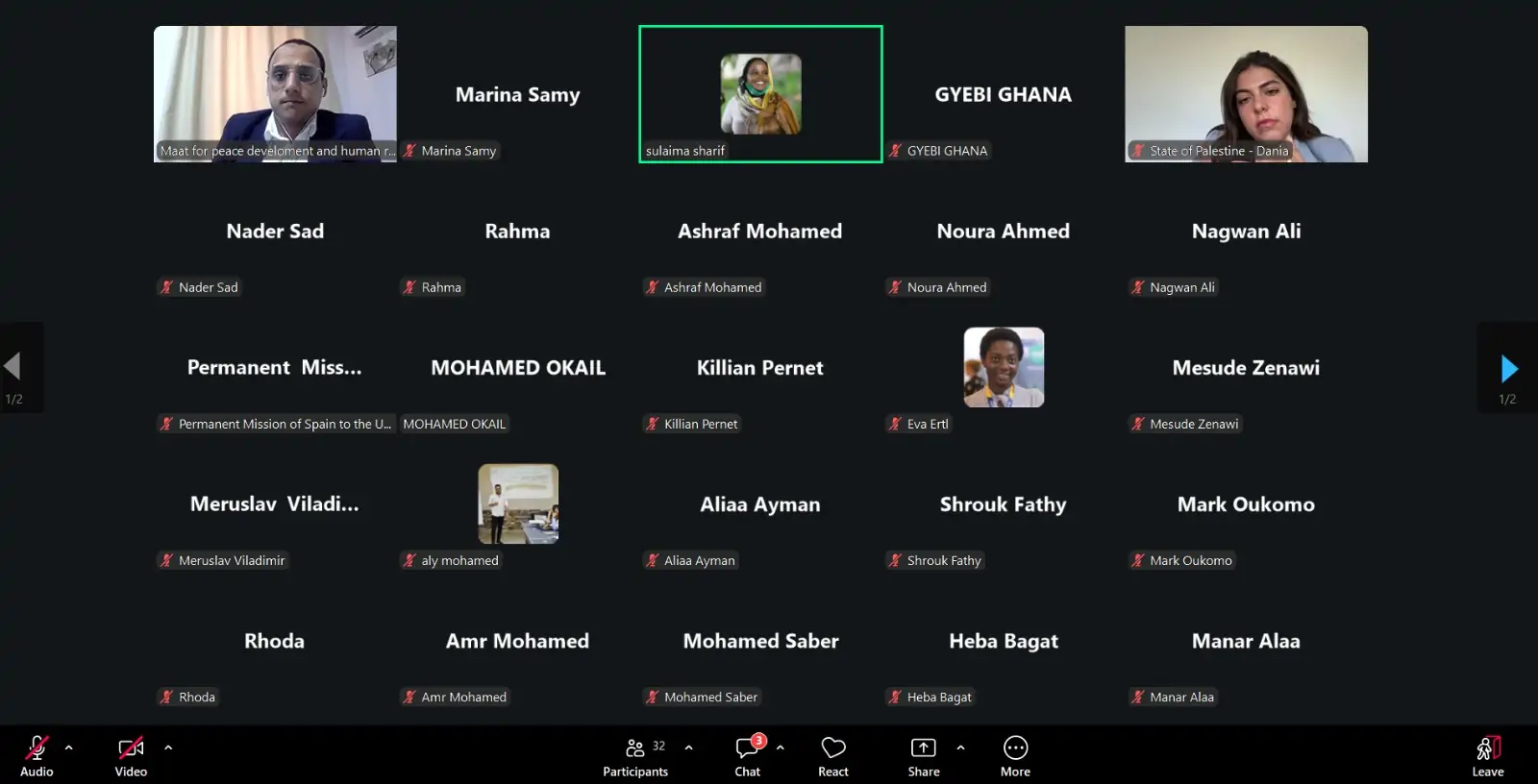
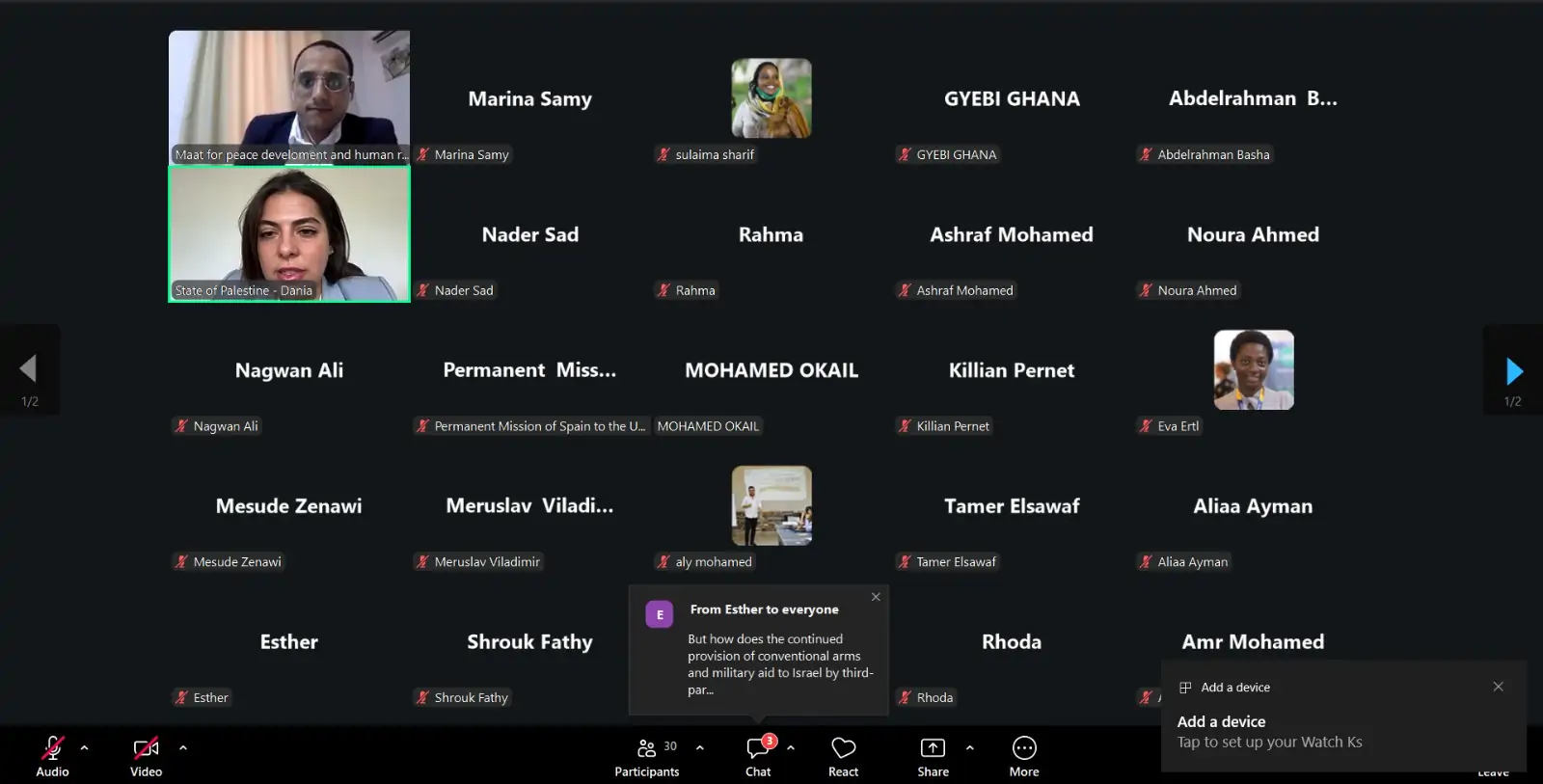
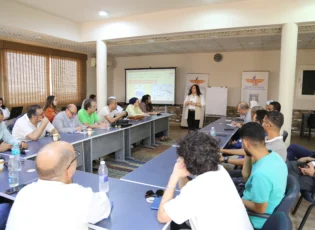
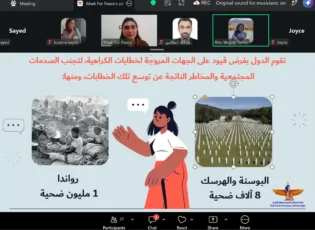
On the sidelines of the Twelfth Conference of States Parties to the Arms Trade Treaty (CSP12), Maat for Peace, Development and Human Rights held a panel discussion entitled “The Role of ATT in Reducing Gender-Based Violence in Conflict Zones in Arab Countries.”
The panel discussion focused on the role of the arms trade in fueling gender-based violence in conflict zones in the Arab region, particularly in Palestine and Sudan. With regard to Palestine, the discussion highlighted how arms transfers to Israel have contributed to exacerbating such violence against Palestinian women and girls, while urging States to fulfill their obligations under the Arms Trade Treaty. Regarding Sudan, the impact of the proliferation of arms on women and girls was examined, with emphasis on the need to integrate gender-based violence risk assessments into arms export controls. Ghana also presented its national experience in integrating disarmament, human rights, and the Women, Peace and Security agenda (WPS), with a view to drawing lessons for Arab countries experiencing armed conflicts.
The panel was opened by Mohamed Mokhtar, Director of the Disarmament Unit at Maat, who noted that the meeting, which brings together a distinguished group of legal experts, international activists, and diplomats, comes within the framework of Maat’s highest priority of highlighting the repercussions of irresponsible arms transfers and diversion, which contribute to exacerbating gender-based violence and conflict-related sexual violence in the Arab region. Mokhtar emphasized that conventional weapons, particularly small arms, constitute key tools for threatening victims, suppressing resistance, and imposing sexual slavery, forced marriage, and mass rape as systematic instruments of war aimed at humiliating and weakening communities.
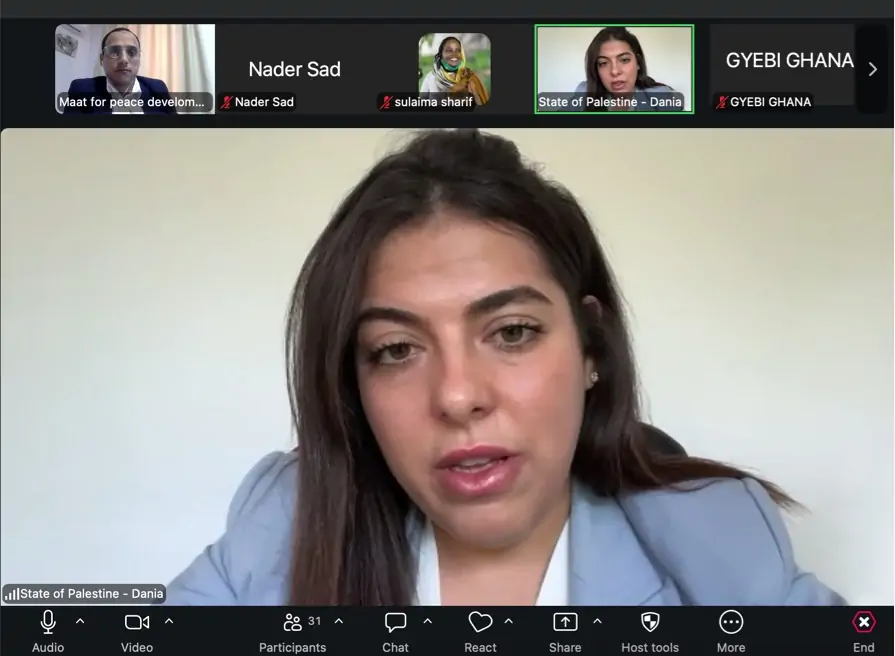
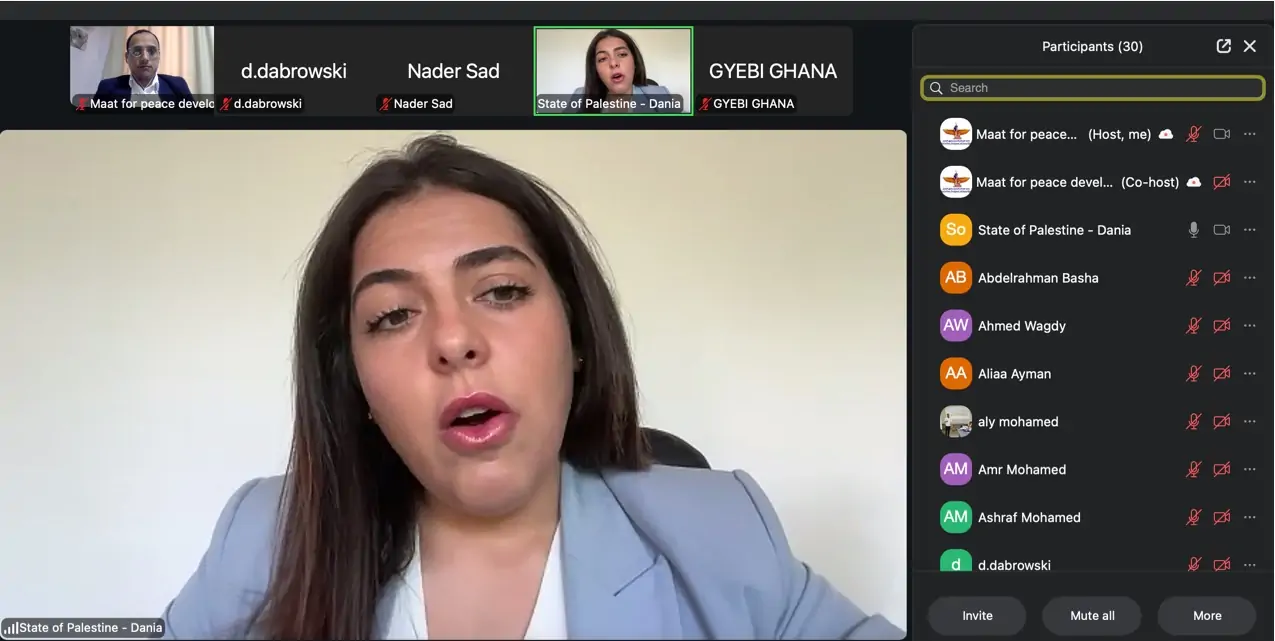
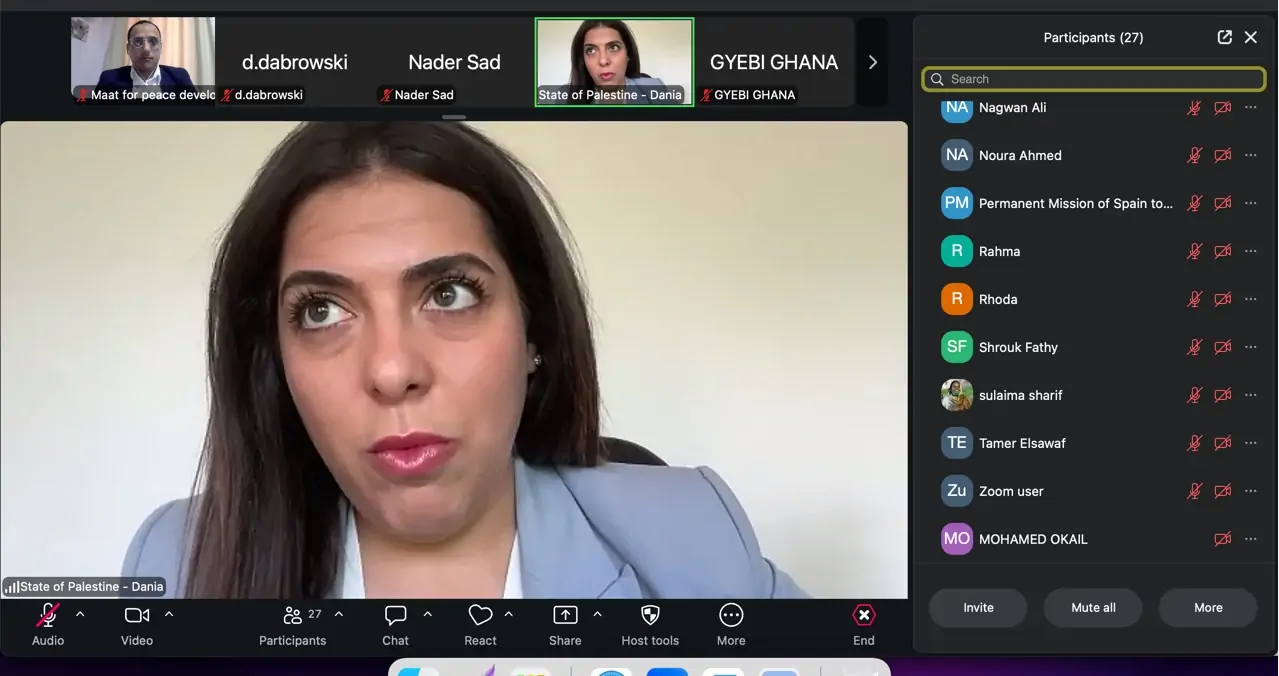
In this context, Dania El-Desouky, First Secretary at the Permanent Observer Mission of the State of Palestine to the United Nations, reviewed the role of the Arms Trade Treaty in preventing and responding to gender-based violence in conflict zones, highlighting how arms transfers to Israel contribute to fueling violence against Palestinian women and girls. El-Desouky stressed that arms-exporting States are obligated to fulfill their obligations under the Treaty by preventing such weapons from being used to commit genocide, crimes against humanity, or serious violations of international law. She also noted her country’s support for the establishment of gender focal points under the Arms Trade Treaty and its continued efforts to address gender-based violence through the Treaty’s mechanisms.
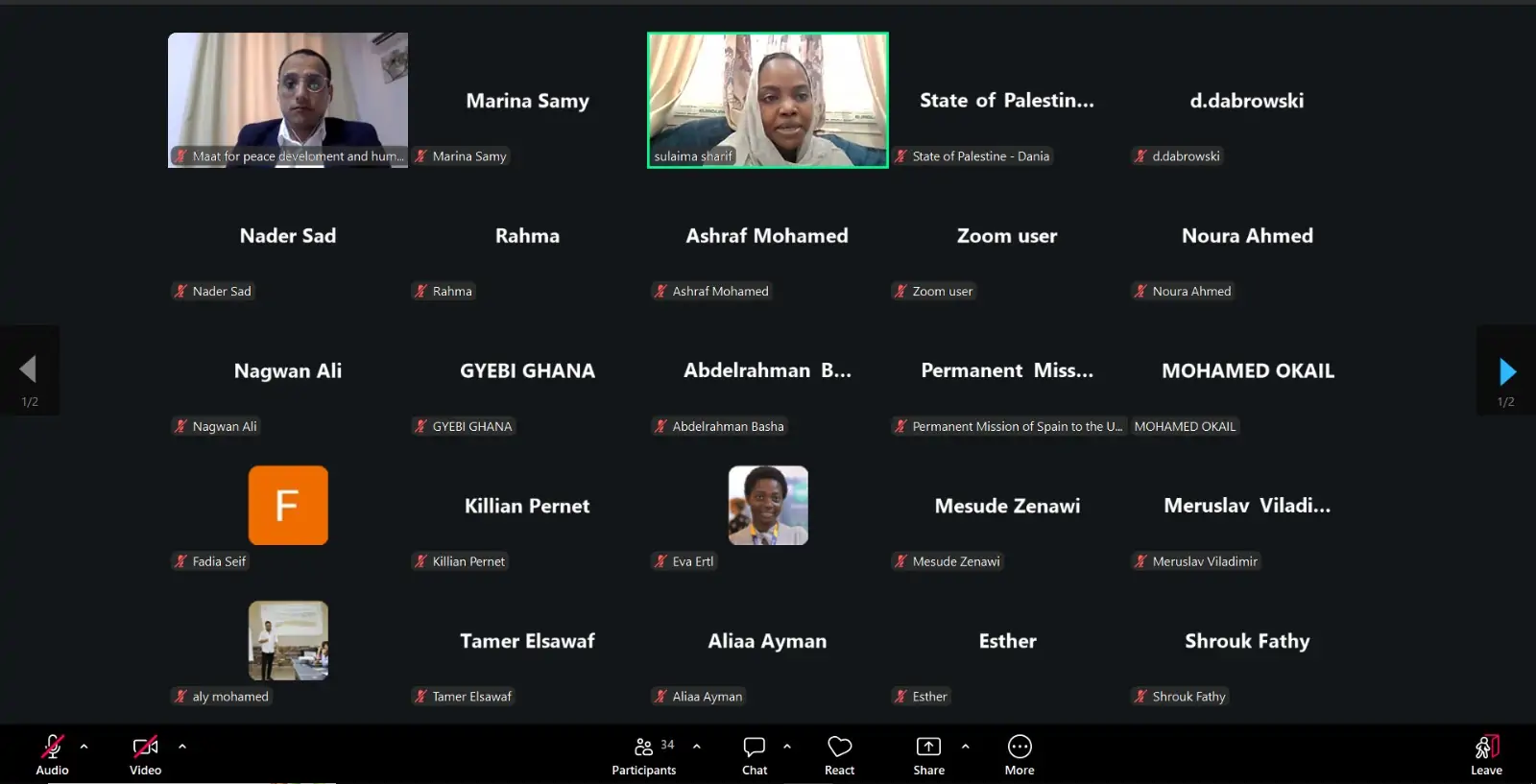
Meanwhile, Dr. Salima Ishaq, State Minister at the Ministry of Labour and Social Development, spoke about the impact of arms transfers on fueling gender-based violence in Sudan, particularly highlighting how the Rapid Support Forces militia has used weapons to commit horrific acts of violence against women and girls since the outbreak of the war in April 2023. She proposed five practical steps to address this crisis, including systematically integrating conflict-related sexual violence indicators into export risk assessments under Article 7 of the Arms Trade Treaty and enhancing the participation of women’s organizations in arms monitoring and control processes. The discussion sought to connect three previously separate tracks: arms monitoring, the WPS, and civilian protection.
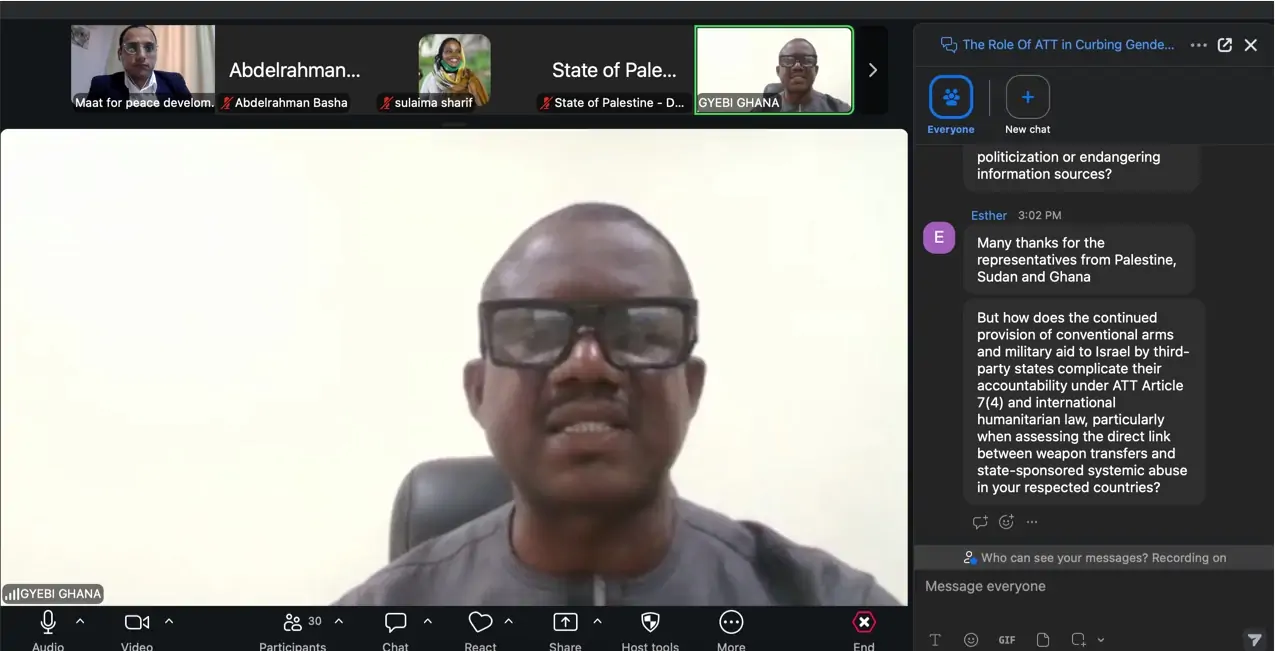
Mr. Gyebi Asante serves as the Director of Policy, Planning, Research, Monitoring and Evaluation (PPRME) at Ghana's National Commission on Small Arms and Light Weapons (NACSA), presented his country’s experience in linking disarmament and human rights with the WPS through an integrated approach. Asante highlighted Ghana’s weapons amnesty programme, which resulted in the surrender of more than 4,000 firearms, as well as the pivotal role of women in disarmament efforts. He also addressed the importance of women’s effective participation in peace and security institutions, calling for the Arms Trade Treaty to be implemented through mechanisms that are more gender-responsive. The discussions also addressed the challenges associated with including non-State actors in national security assessments and the implications of arms flows for the rules of international humanitarian law.
This panel discussion comes in light of Maat’s interest in issues related to preventing the proliferation of arms and promoting international peace and security, particularly in areas experiencing armed conflicts and devastating wars in the Arab region. Maat believes that addressing escalating humanitarian crises requires a comprehensive approach that links disarmament policies, civilian protection, and the implementation of the WPS, ensuring accountability for the parties involved and limiting the repercussions of irresponsible arms flows on the most vulnerable groups, particularly women and girls.
This panel discussion comes in light of the Maat Foundation's focus on issues of arms control and the promotion of international peace and security, particularly in areas experiencing armed conflicts and devastating wars in the Arab region. The Foundation believes that addressing the escalating humanitarian crises requires a comprehensive approach that links disarmament policies, the protection of civilians, and the implementation of the Women, Peace and Security agenda. This approach must ensure accountability for those involved and mitigate the impact of irresponsible arms flows on the most vulnerable groups, especially women and girls.



shortlink: https://safearabregion.org/en/?p=46809


 English
  العربية