

Maat: The Completion of Egypt’s Constitutional Obligation on Local Administration will Yield Countless Benefits
Okeil: Any Genuine Reform in Egypt Begins with Strengthening Local Administration and Addressing its Shortcomings
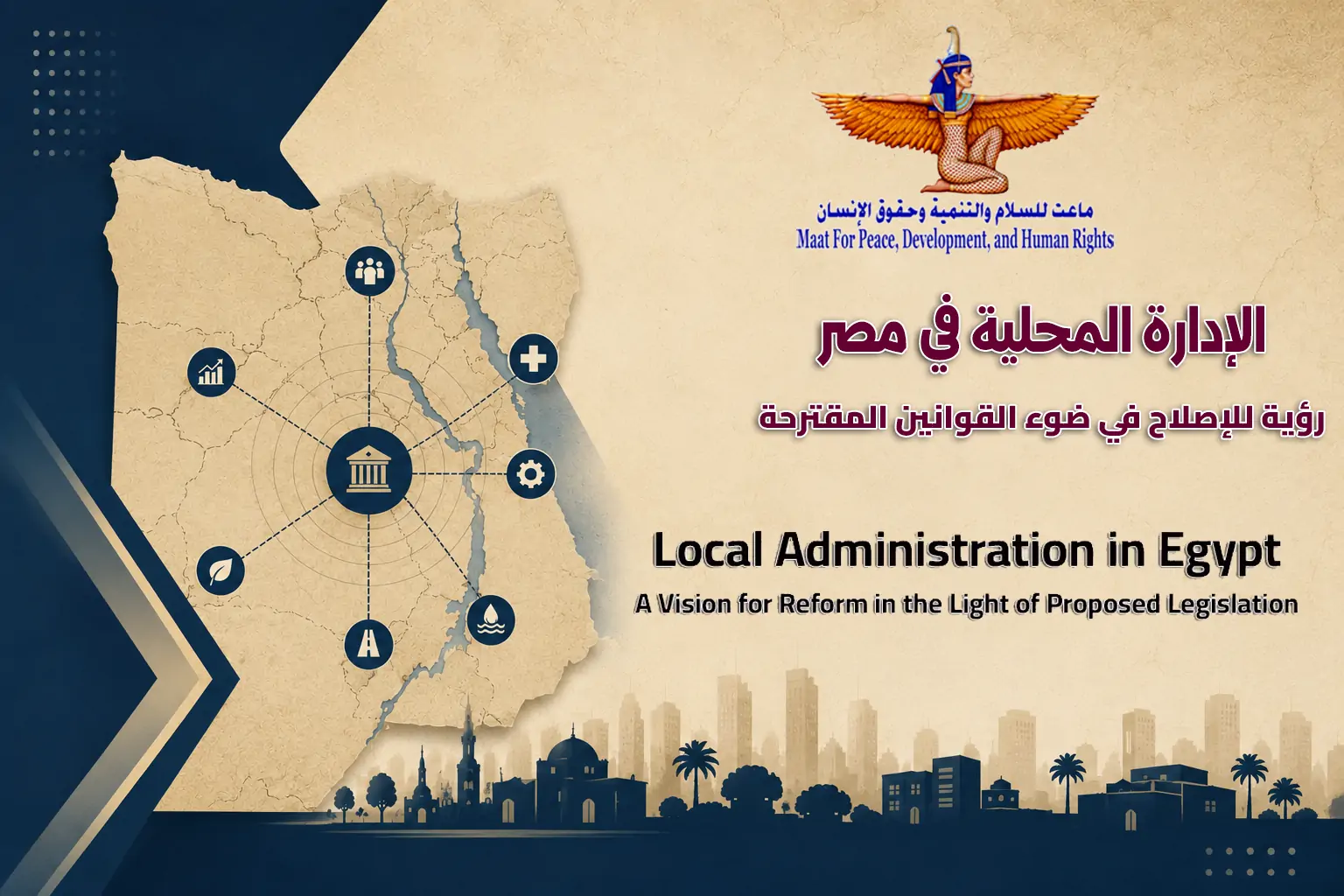
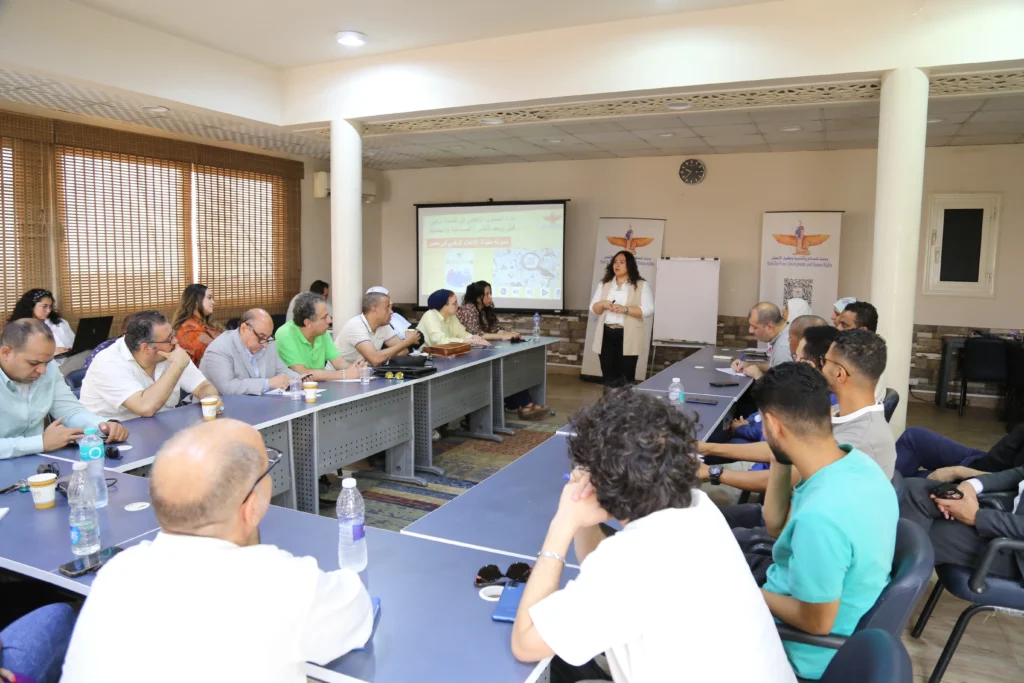
Today, Maat for Peace, Development and Human Rights issued a study entitled “Local Administration in Egypt: A Vision for Reform in the Light of Proposed Legislation.” The study examines the constitutional and legal development of local administration in Egypt. It also reviews four local administration bills currently under consideration in the House of Representatives, and presents proposals to reform local administration in light of the proposed legislation and the potential gains from the current momentum regarding local administration.
Maat welcomed the current direction within the House of Representatives to issue two separate laws: the first to regulate the process of “elections of local popular councils” to address the quota and percentages set out in the Constitution for categories including youth and women; and the second to be concerned with “local administration” to define the powers of local popular councils, governors, financial resources, oversight tools, and other related matters. The study endorsed the local administration proposal discussed in the first phase of the National Dialogue. It also outlined the potential benefits that could result from completing the constitutional obligation on local administration, including updating the existing legal framework for local administration, implementing Egypt’s Vision 2030 for the achievement of sustainable development goals and combating corruption at the local level, and strengthening the roles of political parties.
For his part, Ayman Okeil, an international human rights expert and Chairman of Maat, stated that the adoption of laws related to local administration in Egypt constitutes a constitutional obligation and a political directive from the highest levels. He stressed the need to ensure that the percentages stipulated for women, youth, and other categories provided for in Article 180 of the Egyptian Constitution are met in any electoral system adopted, so that constitutional challenges do not pursue the elections. He added that even any law, however carefully drafted, well-structured, and clear in its purposes and objectives, may have its substance emptied if the appropriate conditions for its practical implementation are not provided.
Okeil further called on any law reached by consensus to address conflicts of jurisdiction between local administration at its various levels on the one hand, and central authorities on the other. He also urged granting local units the necessary powers, authorities, and competences to achieve their objectives in operating and managing local facilities, and to maximize their own resources.
In conclusion, Maat called for the adoption of clear implementation mechanisms to translate the constitutional principles related to decentralization into practical measures in accordance with the constitutional obligation set out in the chapter on local administration in the Constitution. It also encouraged strengthening the role of civil society in raising public awareness of the competences of local councils and encouraging citizens to participate in community life.

 |
 |
shortlink: https://safearabregion.org/en/?p=46767






 English
  العربية