

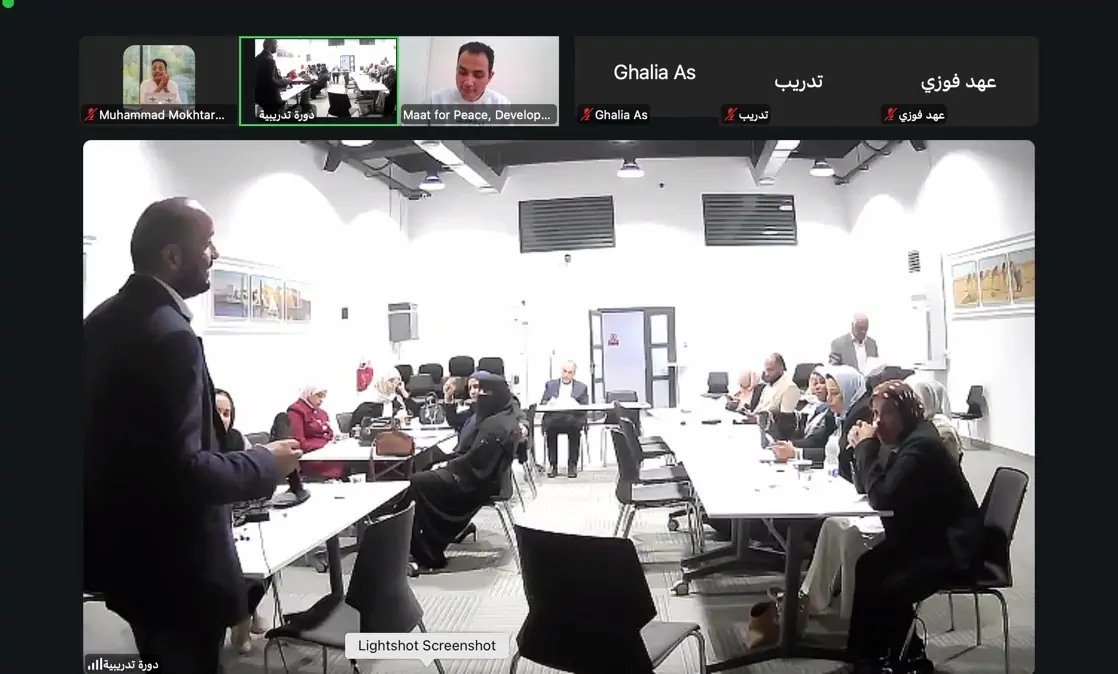
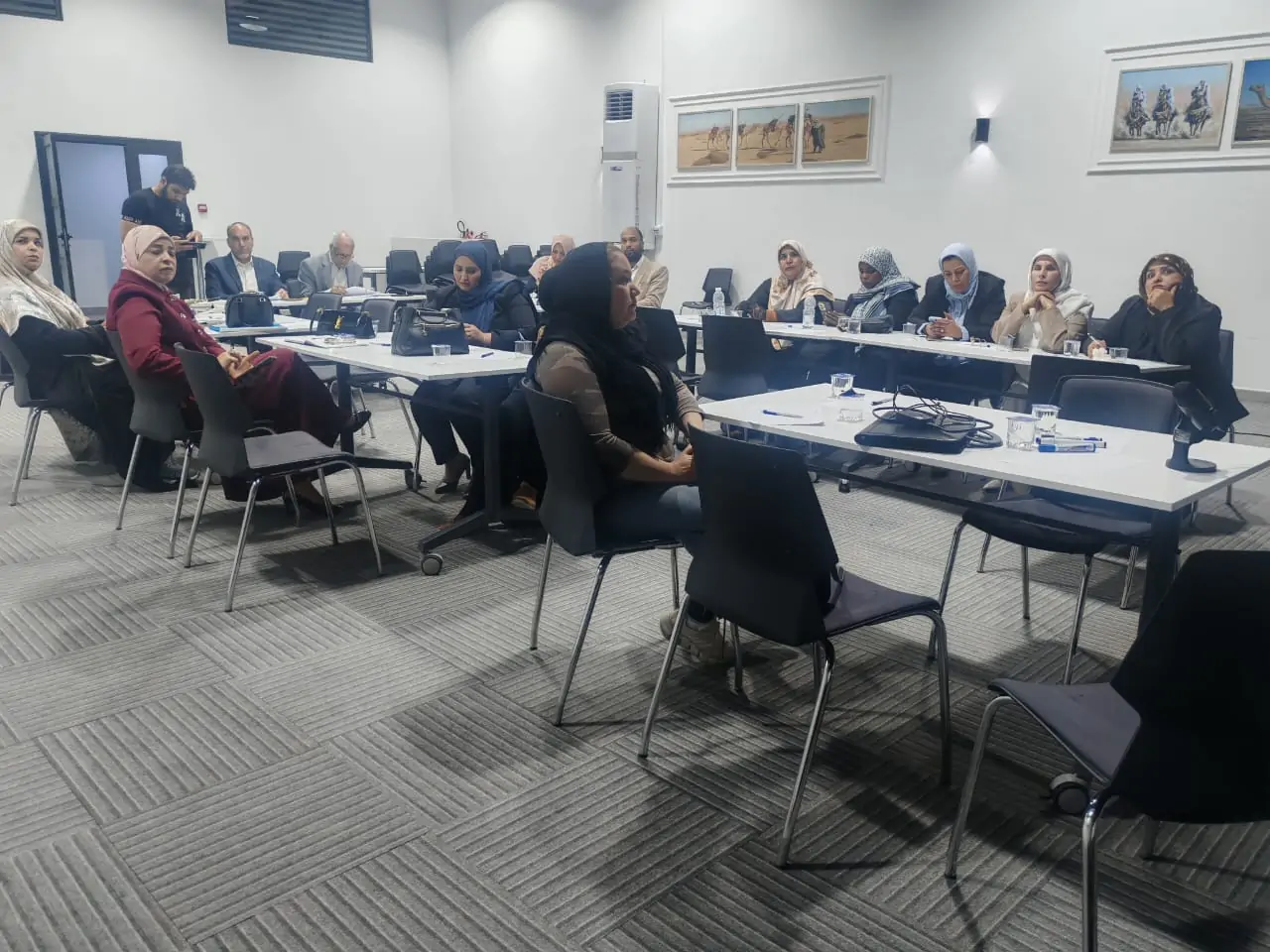
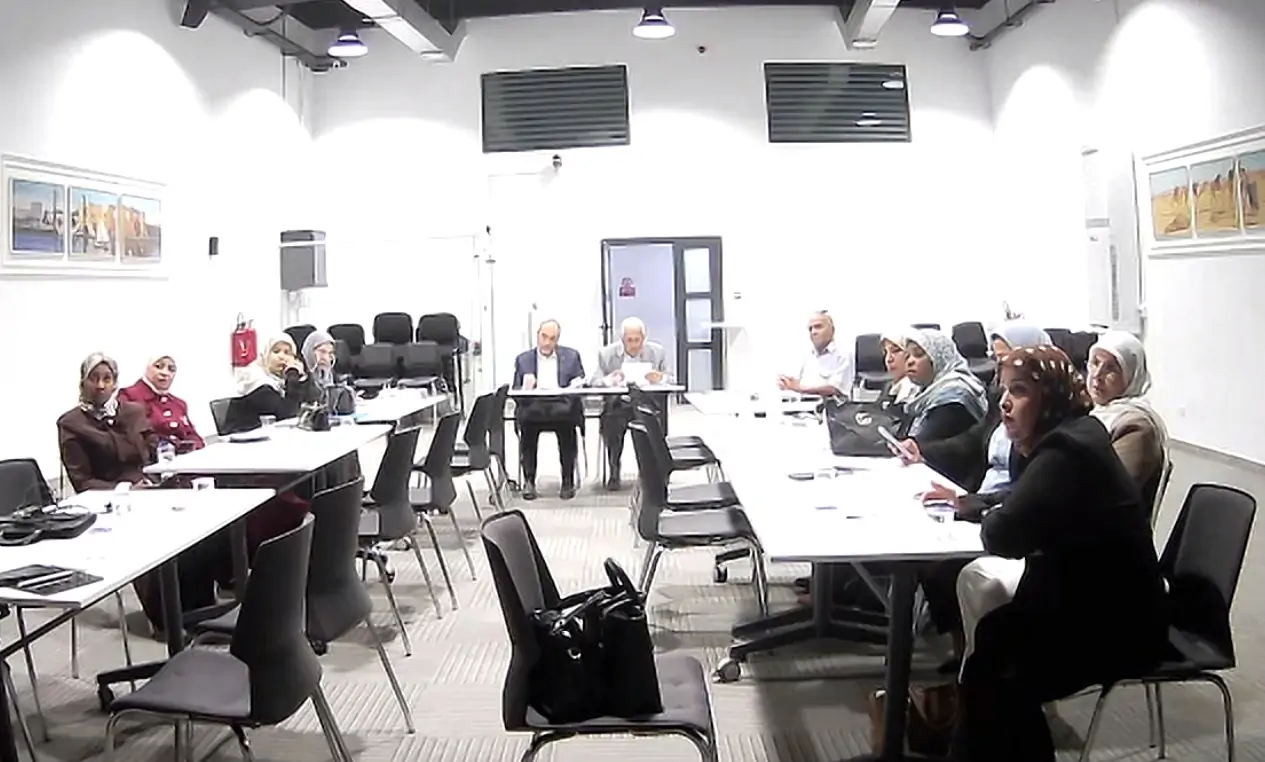
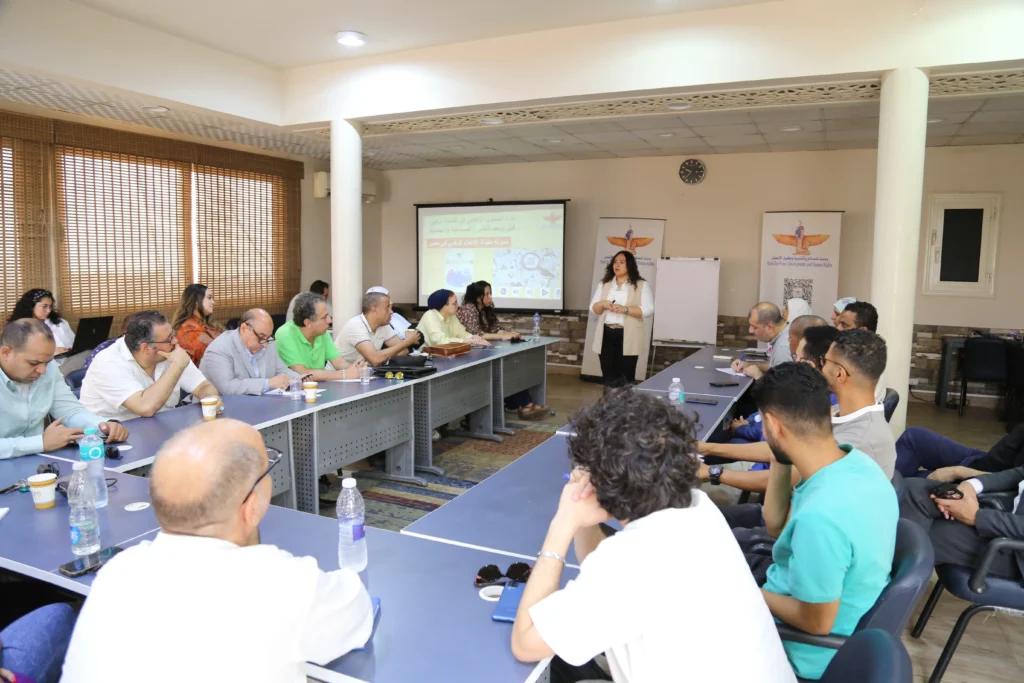
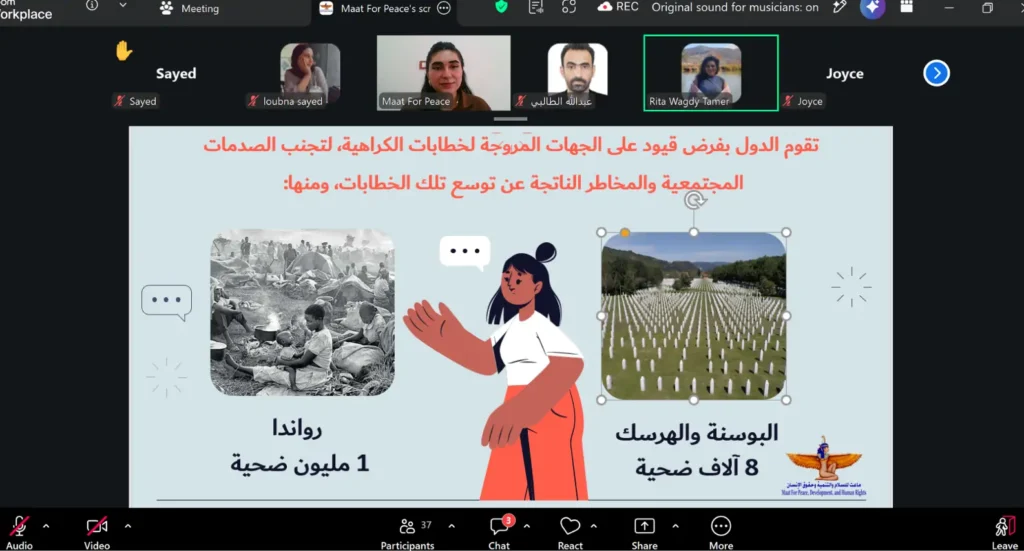
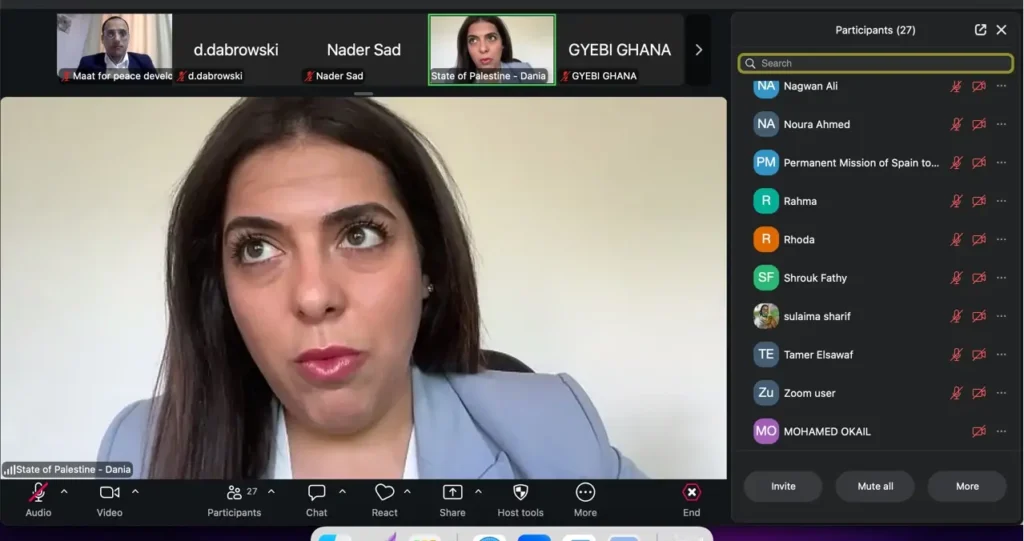
Maat for Peace, Development and Human Rights organized, on 21 and 22 April 2026, a specialized two-day training workshop titled: “Building Capacities of Libyan Civil Society Organizations to Track Irresponsible Transfers of Conventional Weapons.” The workshop targeted representatives of Libyan civil society organizations working in the fields of human rights, peace, and development, in collaboration with the Libyan Organization for Cultural Exchange and Democracy.
The workshop aimed to build participants’ capacity to monitor and document transfers of irresponsible and illegal conventional weapons, understand the legal provisions of the 2014 Arms Trade Treaty, and develop strategies for international advocacy. The workshop covered key themes, including: defining conventional weapons and their eight categories; the difference between irresponsible and illegal transfers; the ATT provisions; practical documentation methods using open-source and field sources; and human-rights-based international advocacy strategies.
This workshop comes within the framework of Maat’s vision to strengthen the capacities of civil society in conflict-affected countries, especially Libya, to enhance monitoring, documentation, and international pressure to regulate arms trade and stop the flow of weapons that fuel violations and conflicts in the Arab region. The foundation intends to organize more specialized courses and expand partnerships with Libyan and Arab civil society organizations in the future.
The workshop was opened by Ayman Okeil, an international human rights expert and Deputy Presiding Officer of the African ECOSOCC, who stated that the workshop is a strategic step to build the capacities of Libyan civil society in the face of the spread of uncontrolled weapons. He emphasized the need to strengthen cooperation between civil society and governments to stop the transfer of weapons to warlords and terrorist groups. He also stressed the importance of forming an Arab alliance of civil society organizations to confront the phenomenon of irresponsible transfers of conventional weapons in the Arab region.
Meanwhile, Mahmoud Al-Farjani, the head of the Libyan Organization for Cultural and Democratic Exchange, highlighted the importance of effectively addressing illegal arms transfer operations, which pose a real threat to security and stability in Libya and the Arab region. He also underscored the need to support Libyan civil society organizations and enhance their capacity to monitor and document these operations. He further emphasized the importance of strengthening regional cooperation within the framework of the African ECOSOCC to achieve more effective results in confronting this phenomenon.
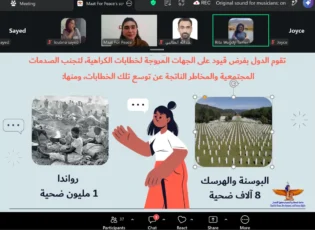
In the first day, Mohamed Mukhtar, head of the Disarmament Unit at Maat, provided an introduction to conventional weapons and divided them into two categories: the first is internationally prohibited, such as cluster munitions and landmines, due to their violation of international humanitarian law; and the second is permitted to be transferred under restrictions and strict oversight. He also discussed sources of international law in Article 38 of the Statute of the International Court of Justice.
Then, Abd al-Rahman Pasha, Executive Director of Maat, delivered a comprehensive session on the ATT. He explained the treaty’s objectives and presented the eight categories of weapons it covers. He also addressed transfer operations included under the treaty, such as export, import, transit, brokering, and re-export/re-direction.
On the second day, Mohamed Mukhtar provided an interactive practical session on mechanisms for documenting arms transfer operations, either through field investigations that rely on collecting direct evidence from real sites through observation, interviews, and photography, or through open-source materials available online, which are generally safer and less costly, especially given complex security conditions. Then, Abd al-Rahman Basha presented international advocacy strategies related to ATT issues. He reviewed types of advocacy (legal, media, diplomatic, community, and research) and their tools, such as speeches, statements, direct meetings, social media campaigns, participation in international conferences, and research and reports.
This workshop reflects Maat’s commitment to promoting a culture of respect for international humanitarian law and expanding the circle of stakeholders involved in documenting and monitoring irresponsible arms transfer operations in the Arab region, supporting accountability efforts and enhancing protection for civilians during times of conflict.



shortlink: https://safearabregion.org/en/?p=46052


 English
 العربية