

During his participation in the meetings for the CSP12 informal preparatory process to the ATT, Okeil calls for mechanisms to stop the flow of military materiel to the RSF in Sudan
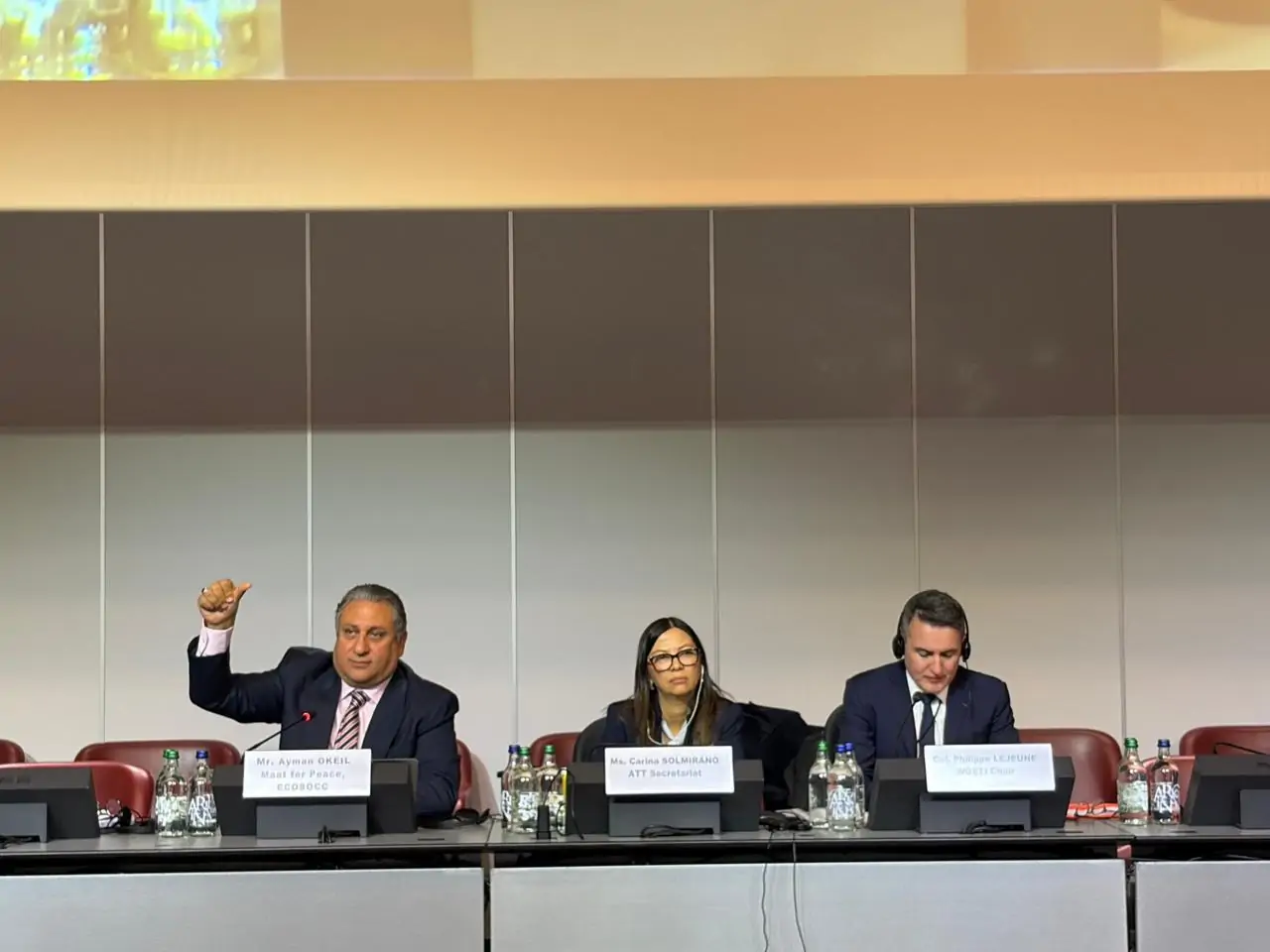
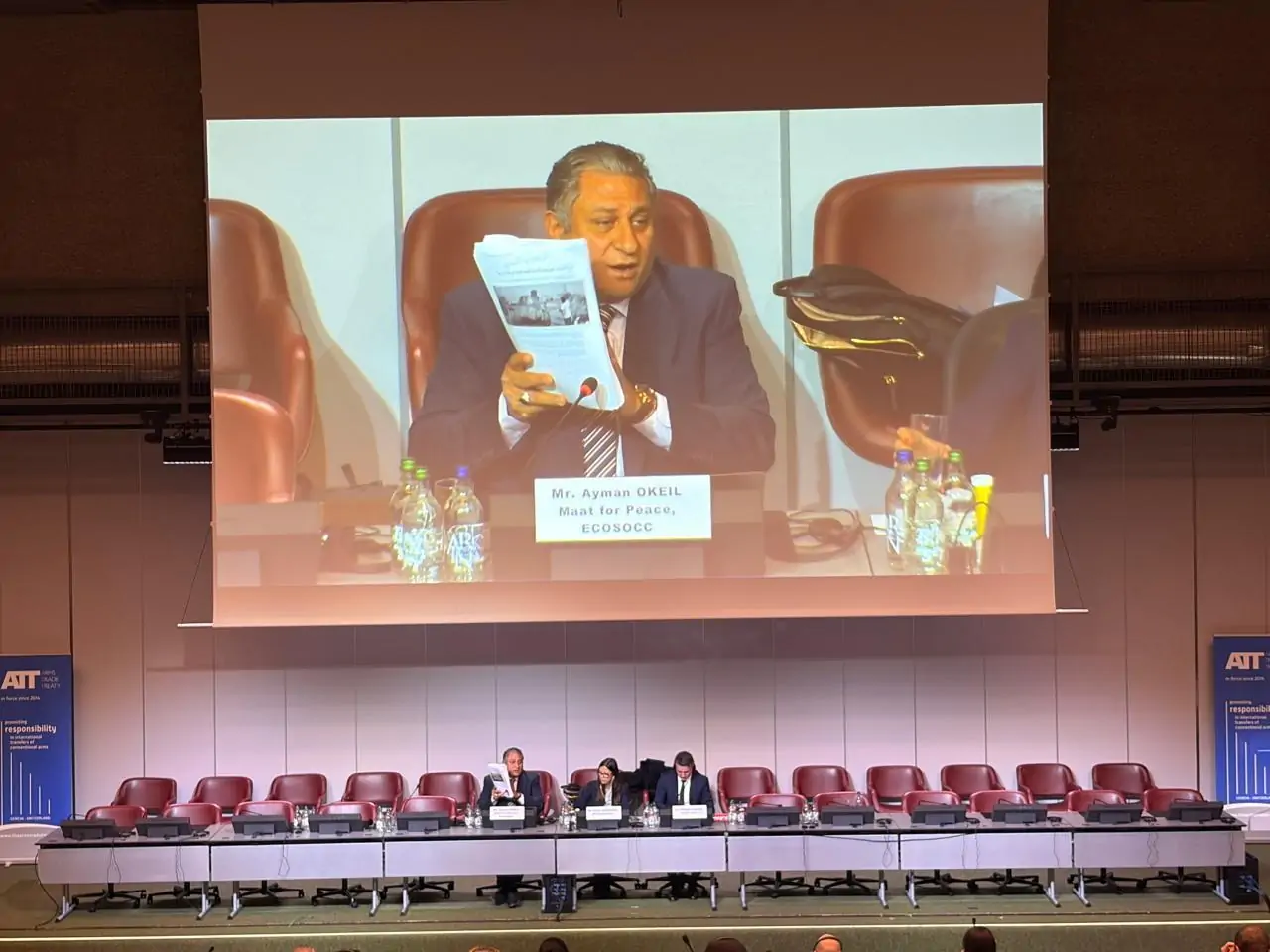
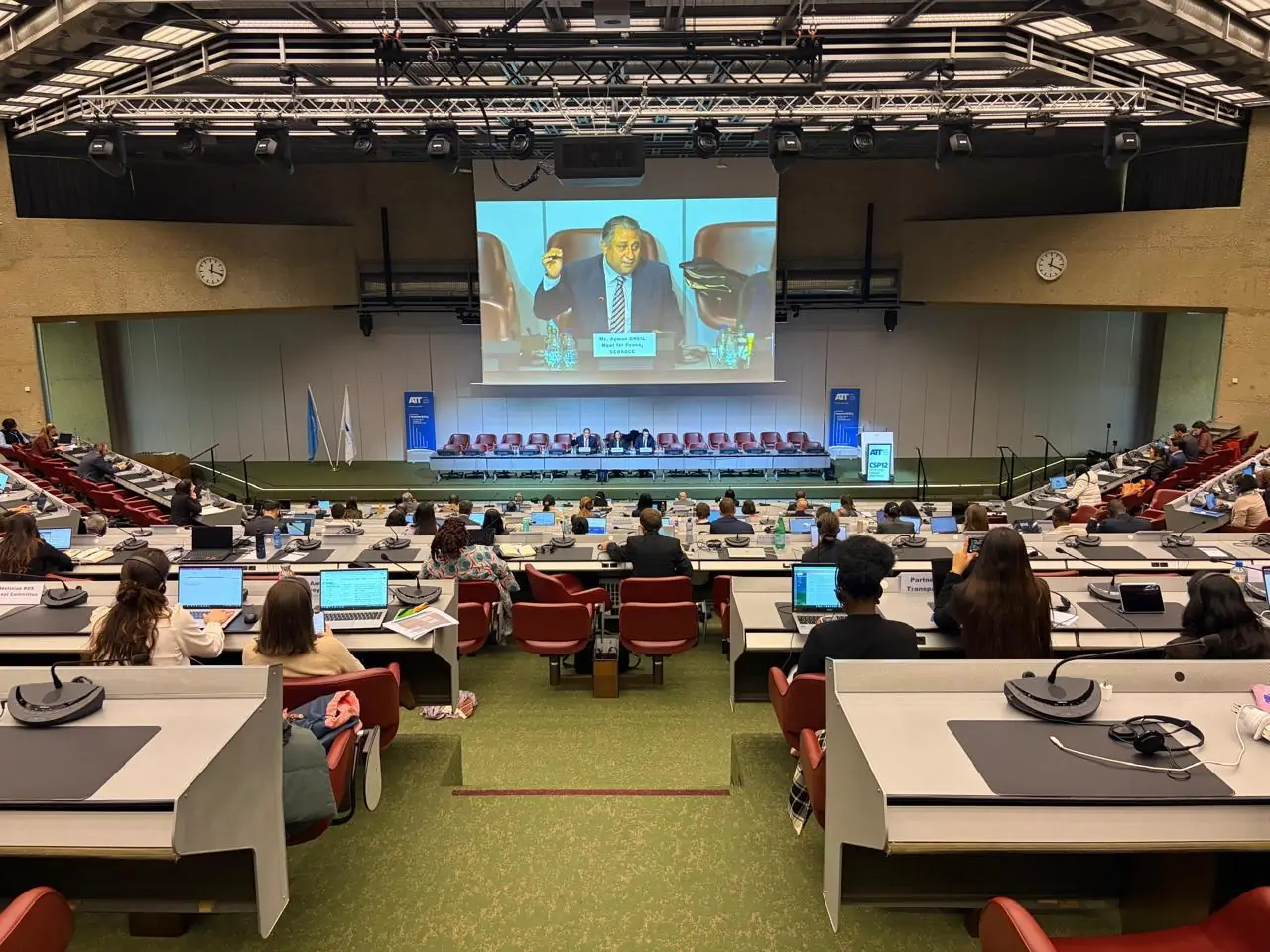
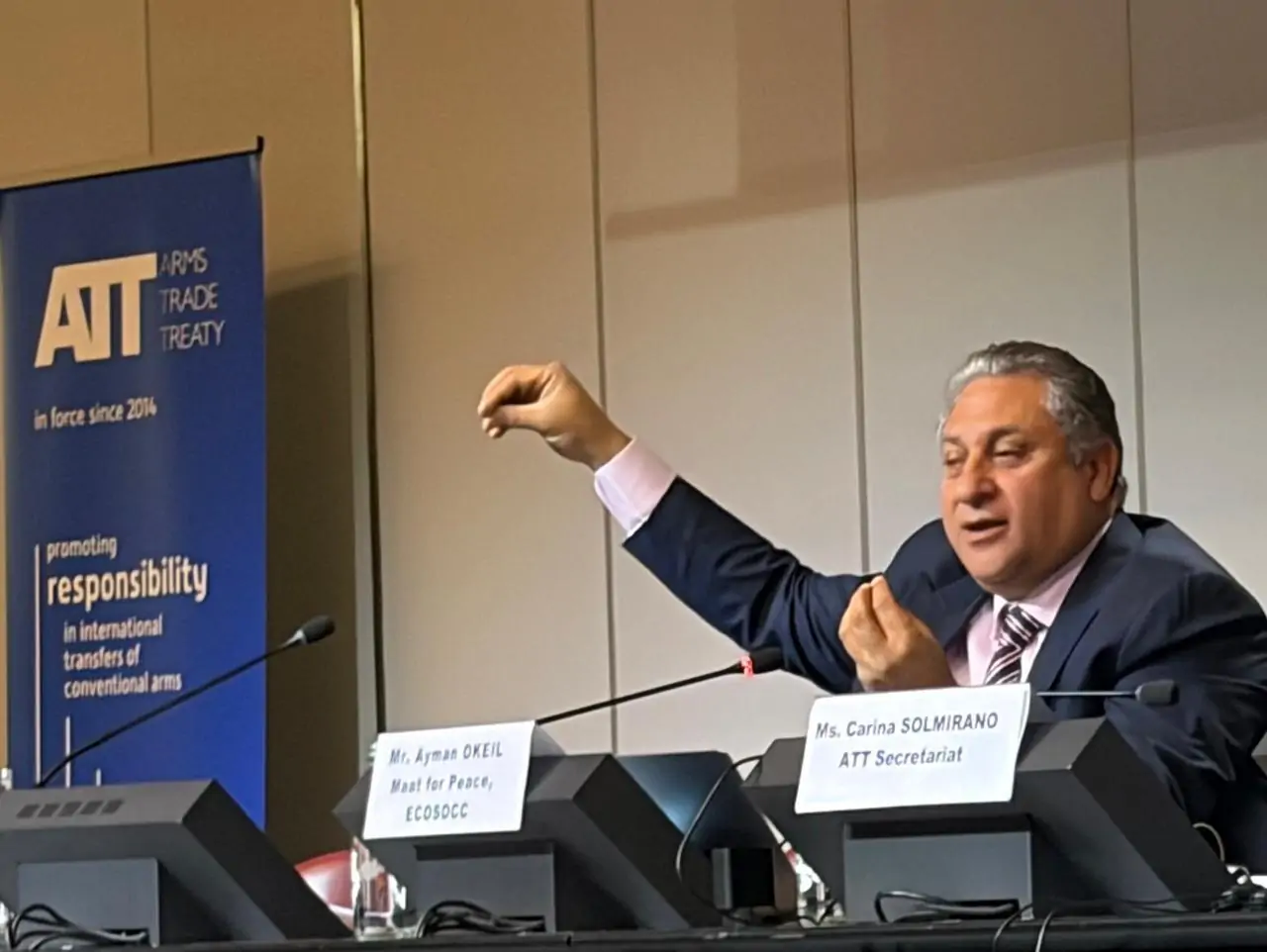
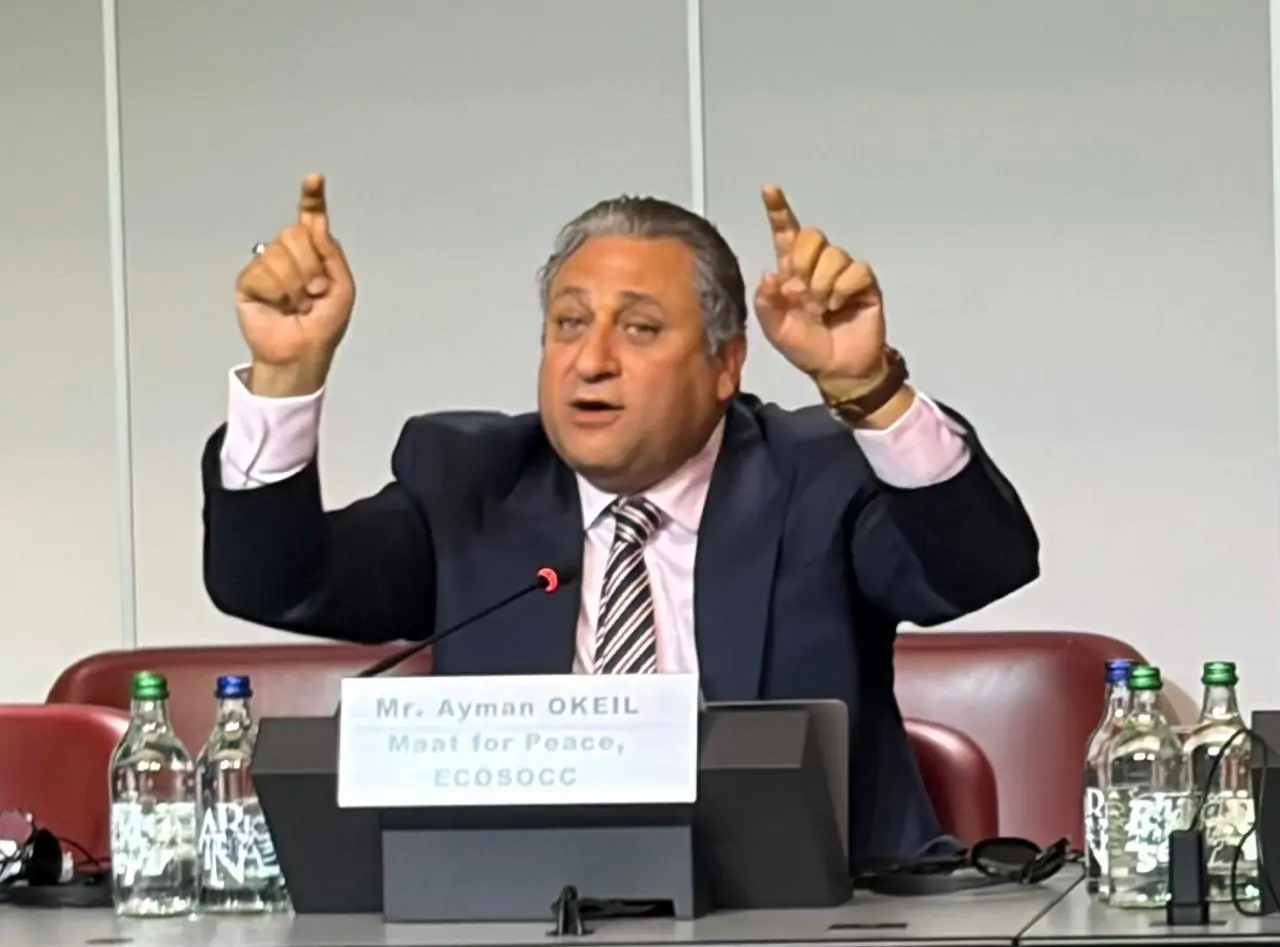
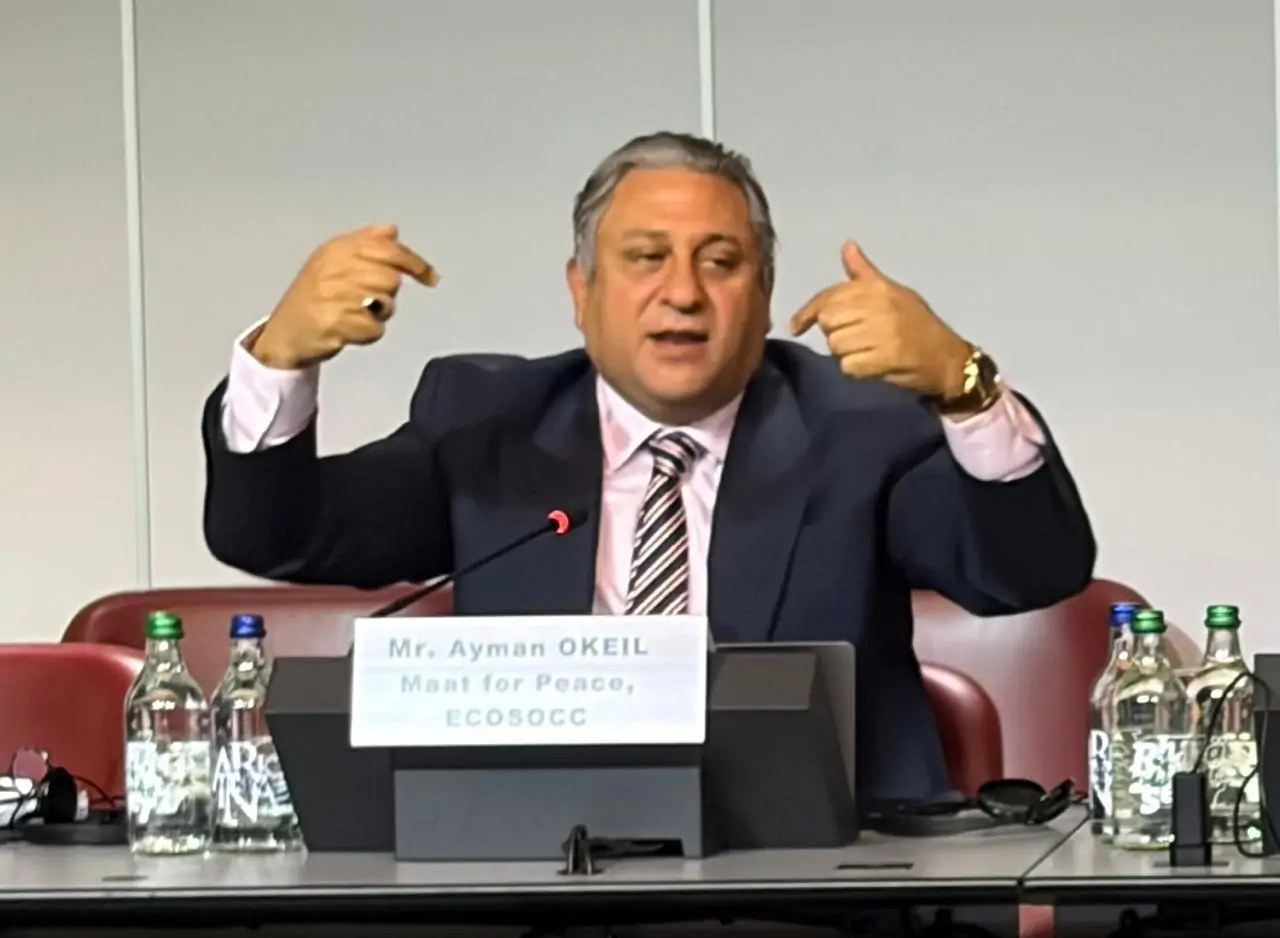
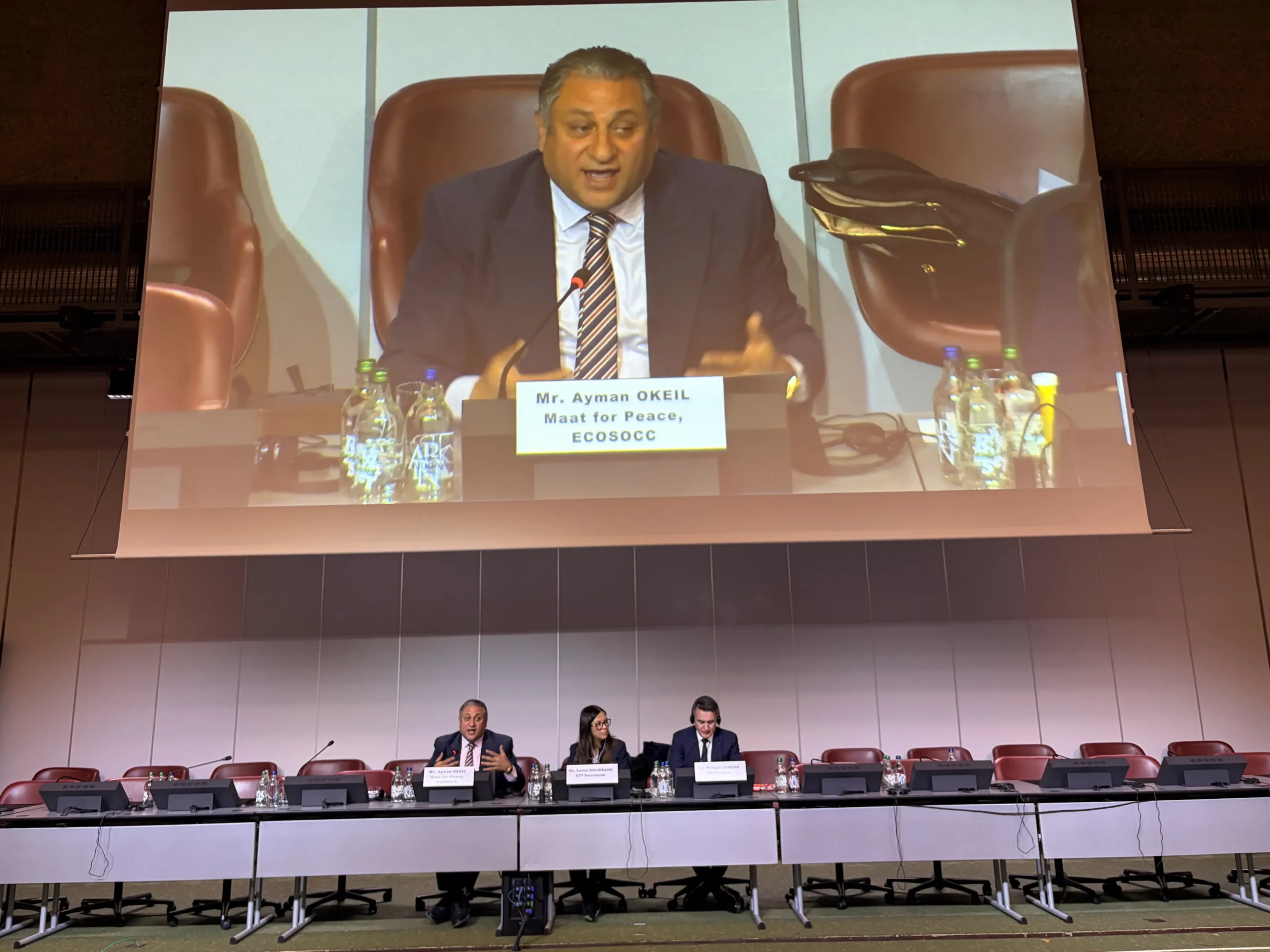
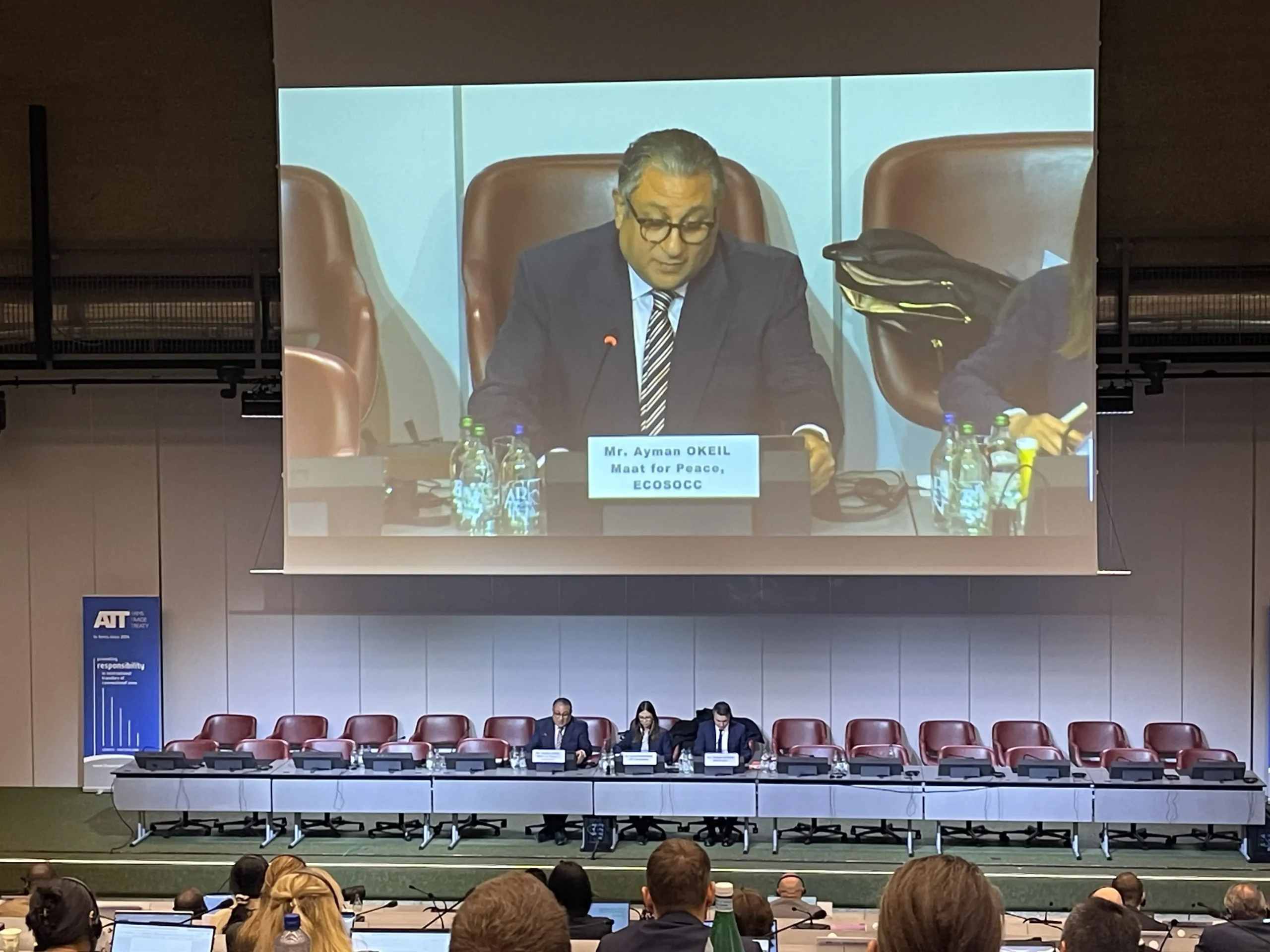
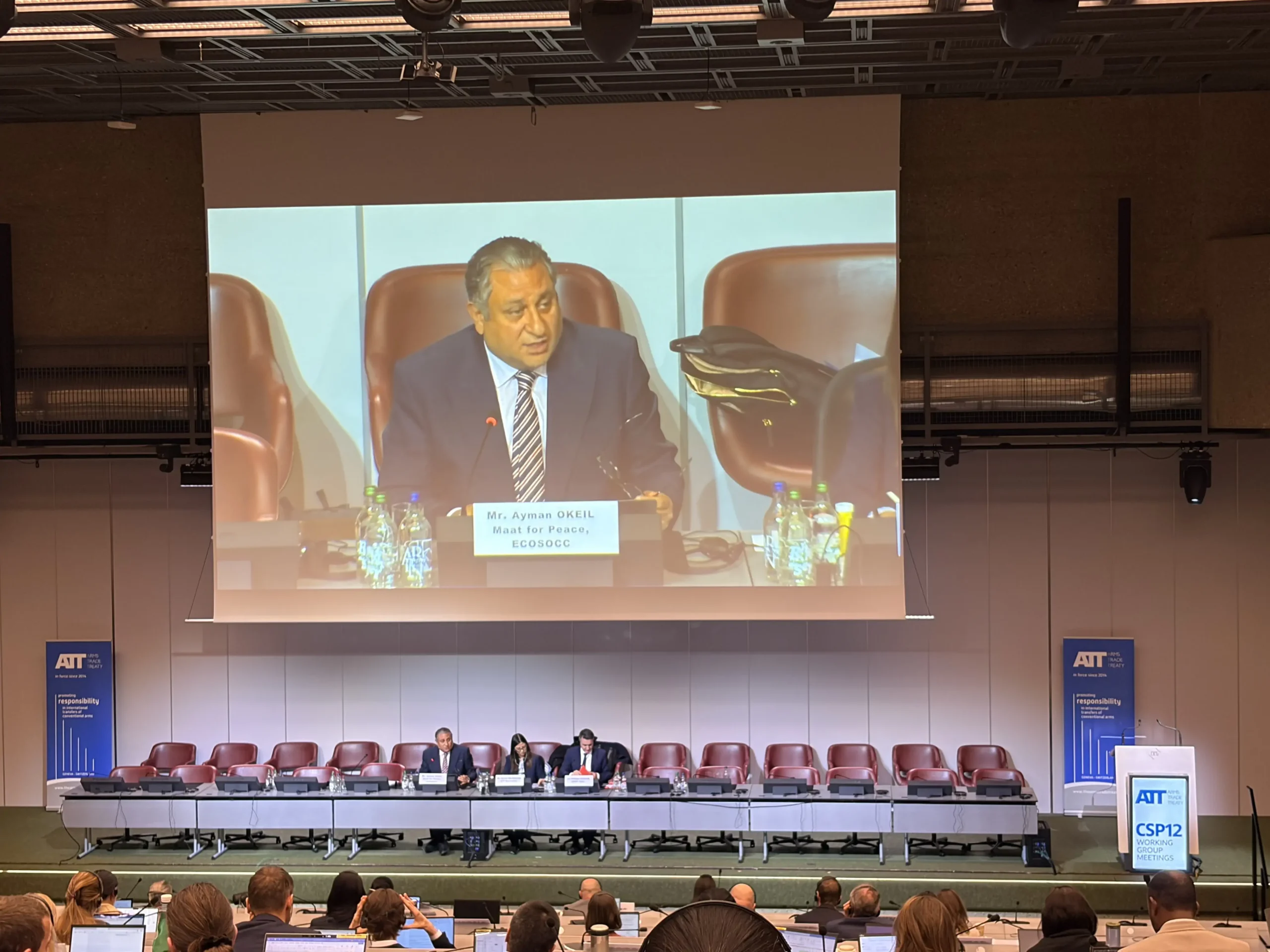
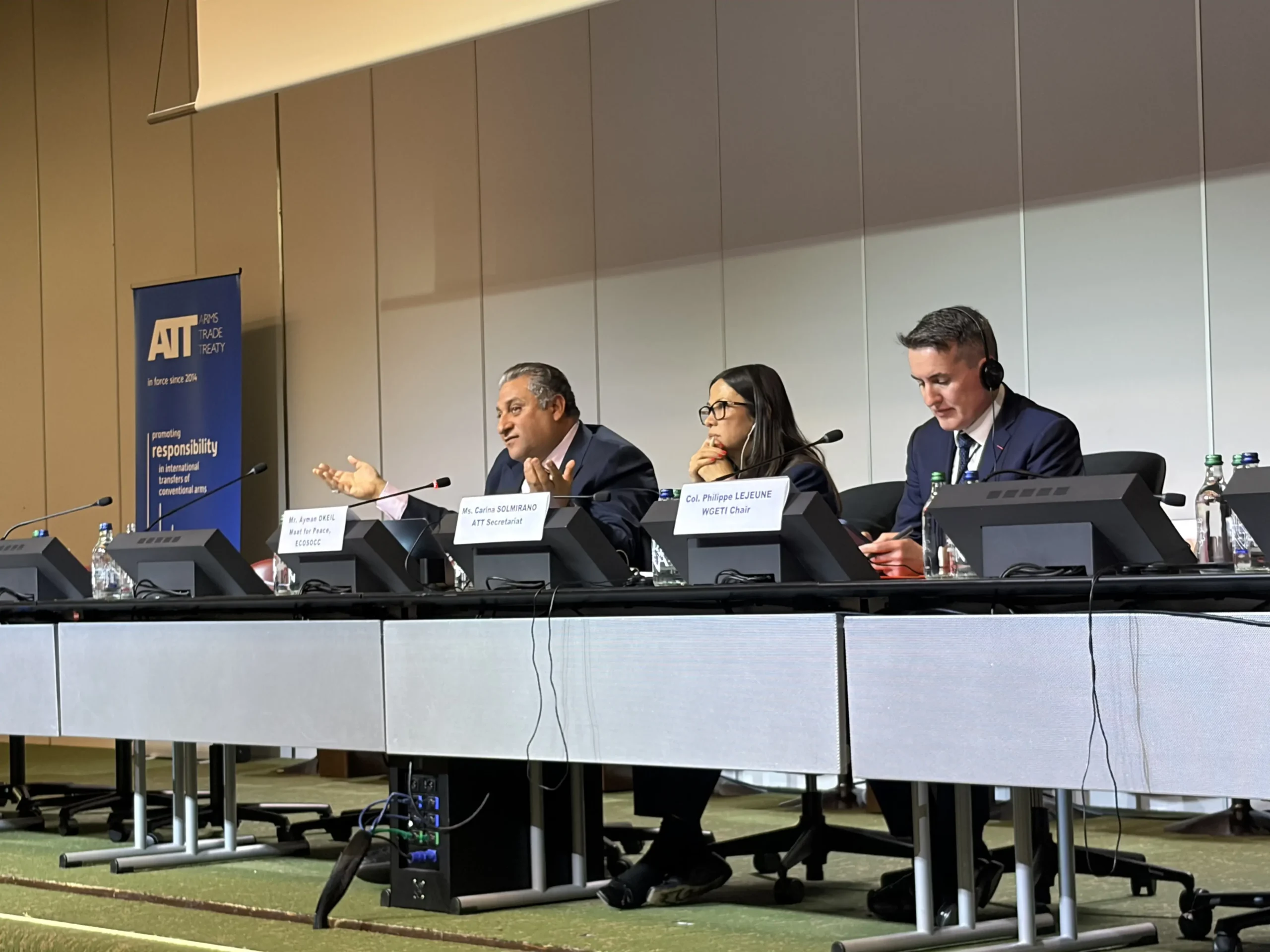
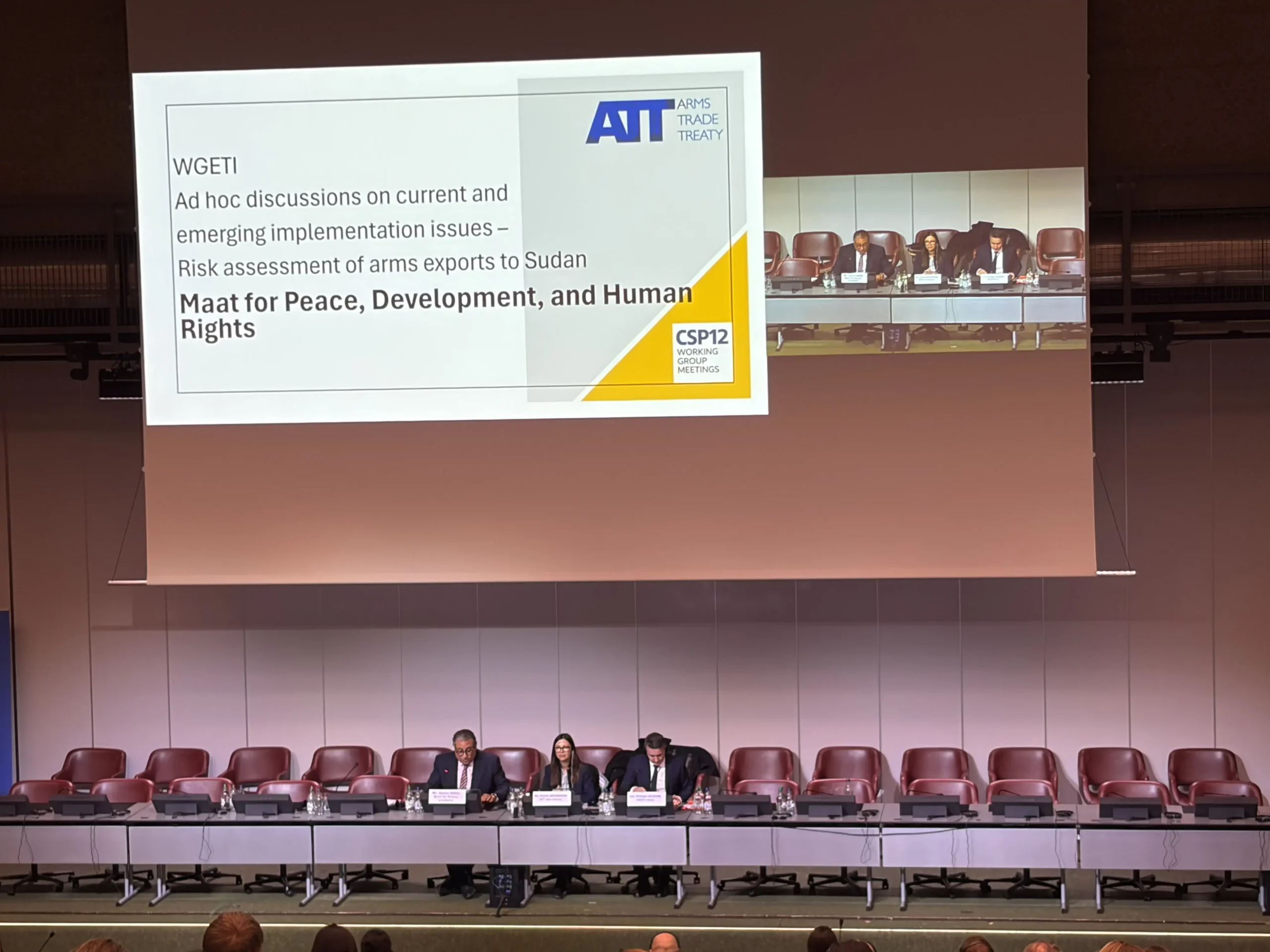
The International Human Rights Expert Ayman Okeil (Also the Deputy Presiding Officer of the African Union ECOSOCC and the Chairman of Maat), participated in the first preparatory meeting for the Twelfth Conference of States Parties (CSP12) to the Arms Trade Treaty. He spoke during the agenda item presented by the sub-working group on current and emerging implementation issues, which is part of the working group on effective treaty implementation, under the segment dedicated to discussions on current and emerging implementation issues.
"Okeil" addressed in his statement, the process of assessing the risks of arms exports to Sudan in light of the ongoing armed conflict since April 2023, which has devastated the lives of civilians. He explained that the Rapid Support Forces (RSF) and their affiliated armed factions have committed grave violations of international humanitarian law amounting to acts of genocide, war crimes, and crimes against humanity against civilians. These include direct attacks on civilians and on essential civilian infrastructure, particularly medical facilities, markets, displacement camps, and places of worship, as well as practices amounting to forced displacement.
"Okeil" stressed that the RSF killed nearly 4,500 civilians in 2025 alone, with more than 21 million people in Sudan suffering from severe food insecurity or high levels of malnutrition. He noted that over 33.7 million people across Sudan now require humanitarian assistance, half of them children, and that 70% of healthcare facilities are non-functional, all consequences of the ongoing war.
Maat chair added that, were it not for the near-unimpeded flow of weapons, military equipment, and ammunition to the RSF in Sudan, the scale of the RSF’s catastrophic destruction and the war crimes and crimes against humanity it commits would not have been possible. Numerous pieces of visual evidence, videos, photos, and social media posts, documented by Maat, indicate that the RSF possesses or has sought to acquire weapons and military equipment manufactured in a number of States Parties to the ATT.
The human rights expert also expressed concern about the potential onward transfer and diversion of weapons from Sudan to other conflict areas, notably Nigeria, Ethiopia, Libya and other states across open borders, which threatens regional and international peace and security and risks turning Sudan into a major arms smuggling hub. He noted active armed groups and pointed to Maat's documented evidence showing an inability to trace and monitor the final destination of weapons and military equipment flowing into the Sudanese theatre.
"Okeil" noted that the situation in Sudan presents a challenge to the implementation of several key provisions of the ATT, including Article 7, which requires States Parties to assess arms export cases and to determine whether the exported arms would contribute to or undermine international peace and security, or be used to commit or facilitate serious violations of international humanitarian law or serious acts of gender based violence; exports must not proceed if such risks are substantiated. He also referenced Article 11 of the Treaty, which requires States Parties to take measures to prevent the diversion of conventional arms covered by the Treaty, including through risk assessment and mitigation measures.
At the end of his remarks, "Okeil" raised a number of issues for discussion with delegations from States, international and regional organizations and civil society, including how to strengthen Article 7 risk assessment mechanisms to ensure that weapons and military equipment do not reach armed factions in Sudan involved in besieging civilians and obstructing aid; the need to reconsider practical measures States can take to verify end user certificates and to prevent diversion via third States under Article 11; measures to ensure that military equipment is not supplied to non state armed groups in conflict zones, particularly Sudan; and good practices States can share for identifying and mitigating diversion risks under Article 11 in the Sudanese context.
Several States and organizations responded to the statement, notably the European Union, the United Kingdom, France, Germany and New Zealand, condemning violations of international humanitarian law in Sudan and underscoring the importance of establishing mechanisms to control the flow of arms to parties to the armed conflict in Sudan.
It is worth noting that the importance of this discussion lies in its role as a step toward establishing mechanisms to restrict the flow of arms to the RSF and armed factions in Sudan, given the gross violations they commit that amount to war crimes. The discussion focused on measures to prevent the flow of arms via third States with poor records of diversion to parties to armed conflicts, and which are currently supporting and provisioning the RSF with weapons and military equipment, thereby undermining international peace and security and risking the transformation of Sudan into a center for illicit arms trafficking.







shortlink: https://safearabregion.org/en/?p=45916



 English
 العربية