

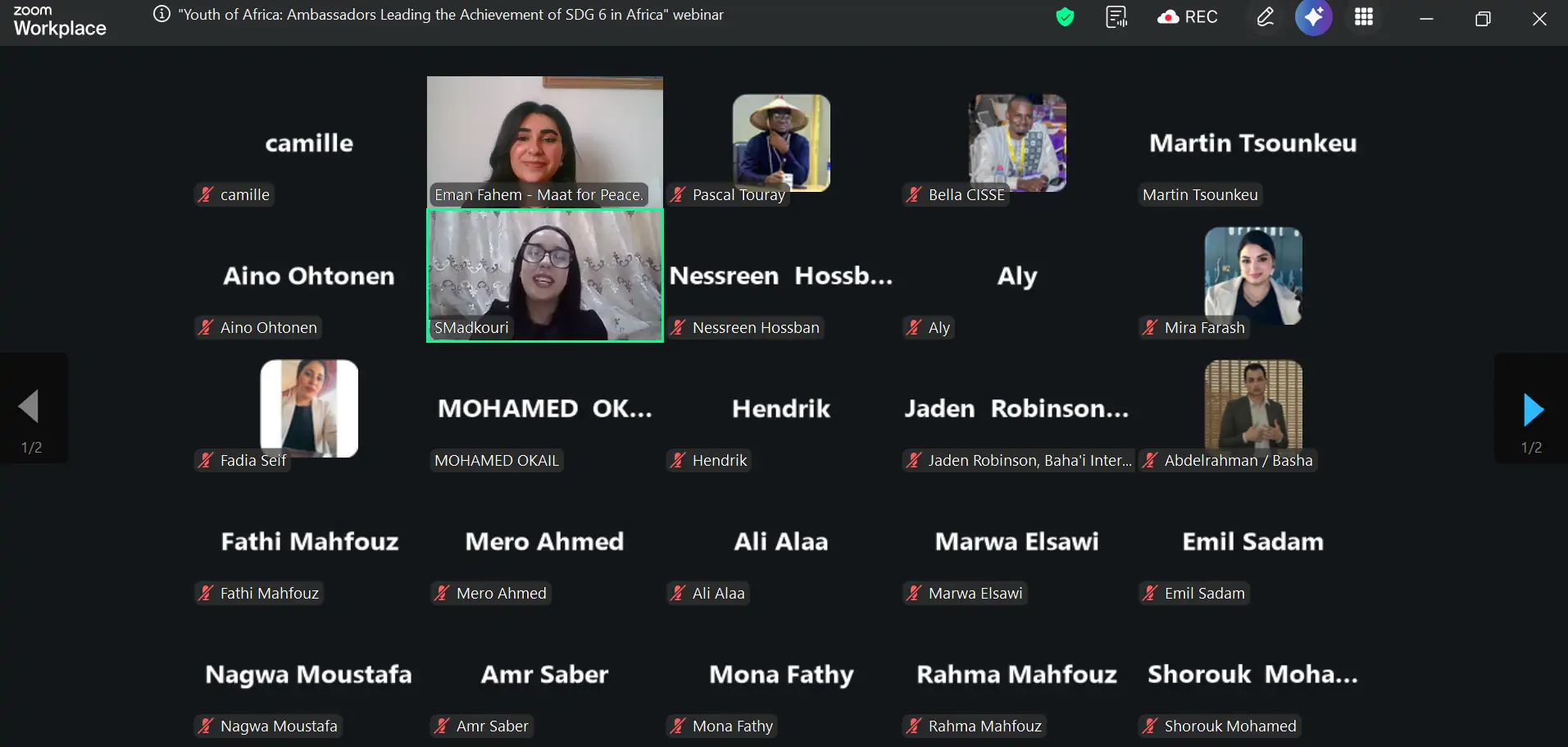
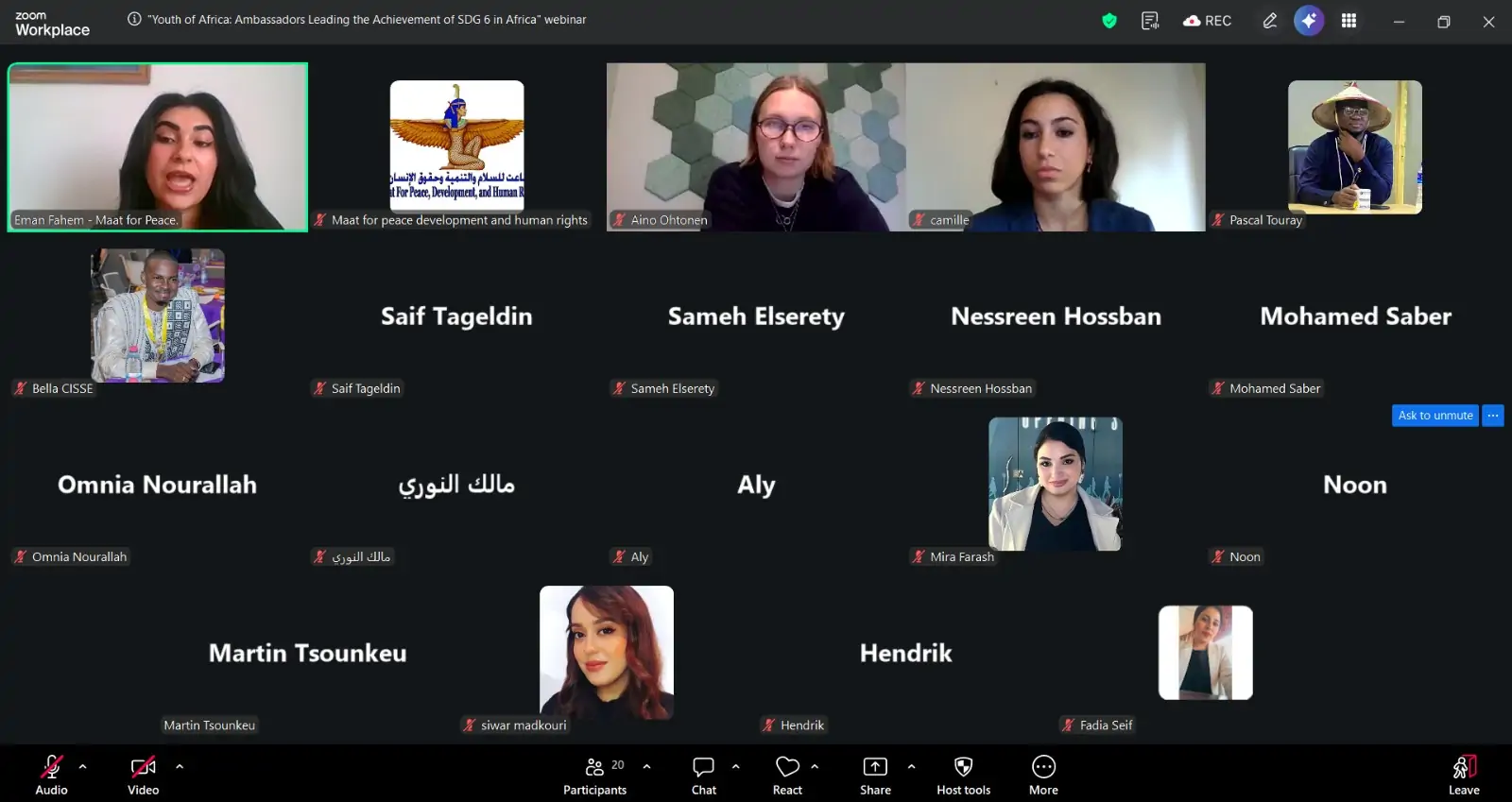
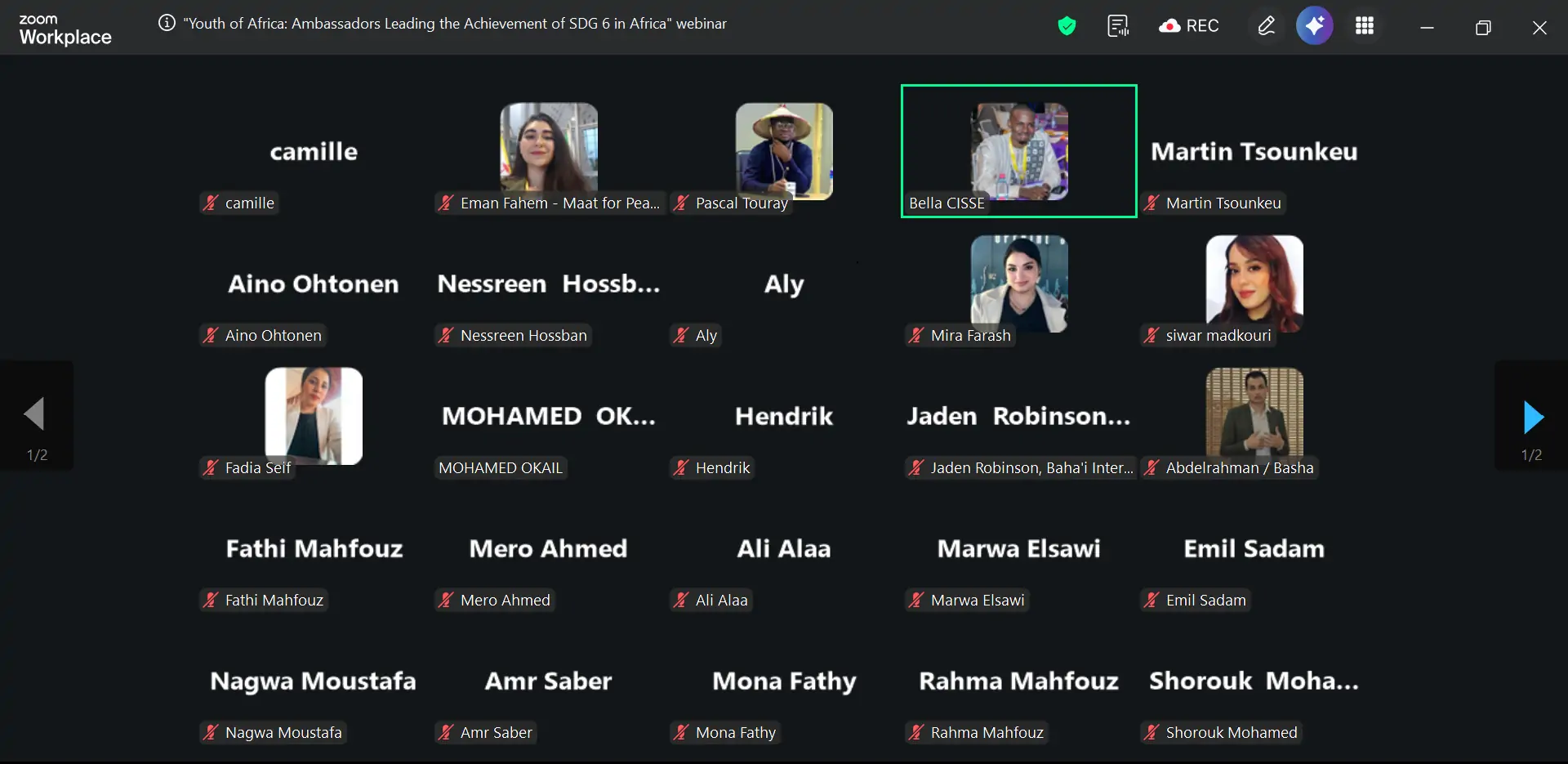
During the webinar, Ms. Eman Fahem, the Director of the Sustainable Development Unit at Maat for Peace, emphasized that this webinar, which brings together several experts active in the field of sustainable development and young activists, is part of Maat for Peace's interest in discussing ways to activate the role of African youth in achieving the development agenda within Africa, particularly in achieving SDG 6, which aims to ensure water security and sustainability and provide sanitation services for all Africans. It also aims to enhance synergies between SDG 6 and SDG 17 by activating partnerships and the role of stakeholders in achieving development goals in Africa.
During the webinar, Iman Fahim, Director of the Sustainable Development Unit at Maat Foundation for Peace, emphasized that this webinar, which brings together a number of experts active in the field of sustainable development and young activists, comes as part of Maat Foundation for Peace’s interest in discussing ways to activate the role of African youth in achieving the development agenda in Africa, foremost among which is achieving Sustainable Development Goal 6, which aims to ensure water security and sustainability and provide sanitation services for all Africans, and to enhance synergies between Sustainable Development Goal 6 and Sustainable Development Goal 17 through activating partnerships and the role of stakeholders in achieving development goals in Africa.
In this context, Ms. Camille Pardonneau, representative of the NGO Major Group for Africa, pointed out the gap between the targets and aims of the 2030 Agenda, particularly the aims of SDG 6, compared to the dire reality of water and sanitation in Africa. She noted the slow progress made by African countries in achieving SDG 6, reflected in the increase in access to drinking water from 35% to 40% between 2015 and 2024, while access to sanitation services remained at low levels in some regions of the African continent.
As for Mr. Martin Tsounkeu, the General Representative of Africa Development Interchange Network (ADIN), he pointed out in his talk the funding gaps that hinder the achievement of the sixth SDG of 2030 Agenda within Africa, compared to the announced funding needs of Africa. He also highlighted the varying nature of development financing realities at the level of the continent's regions, countries, and local communities. The Sub-Saharan Africa region is experiencing a major funding gap that has negatively impacted sanitation services within the countries of the region compared to the North African region, while some countries on the continent are experiencing disparities between urban and rural areas within the same country.
While Mr. Bella Cisse, the Executive Director of the Network of Inclusive Development in the Sahel region, explained in his speech about the impact of funding gaps experienced by the African continent on their ability to achieve SDG 6 of the 2030 Agenda, the importance of Africa moving toward creating innovative financing mechanisms to mobilize funding from higher financing levels down to local communities. He also highlighted the role of youth in managing water projects within the communities of Sub-Saharan African countries and the Sahel region, and their role in supporting local communities' capacities to access water and sanitation services more easily.
In the context of enhancing African countries' ability to benefit from global and regional experiences, Ms. Aino Ohtonen, a researcher specializing in European affairs, reviewed a set of the most prominent activities and efforts of youth in supporting their countries' potential to achieve the sixth SDG. Among these efforts were the youth declaration on water in Latin America, youth hackathon events, and the "Days for the Future" movement led by global youth development advocates. These youth initiatives have played a significant role in creating a driving force to shift the global financing agenda toward funding development in Africa.
Mr. Pascal Touré, President of the Gambian Youth Vision Organization and permanent member of the African ECOSOCC for Gambia, discussed the role of youth as influential leaders in developmental decision-making, after years of being viewed merely as complementary elements in the developmental process. Pascal highlighted the role that young development actors play globally and in Africa in supporting the developmental path, starting from idea generation, shaping the trajectory of adopted technologies, and reaching participation in developmental decision-making in line with local community priorities.
Meanwhile, Ms. Siwar Madkouri, a human rights activist specializing in combating sexual violence and gender-based violence, highlighted the role of accountability mechanisms designed and led by youth in supporting efforts to achieve SDG 6 within Africa. She emphasized the importance of adopting a youth-centered approach based on impact monitoring and evaluation instead of traditional monitoring frameworks, institutionalizing youth participation, and following a transparency-based approach thru the adoption of open data systems.
The webinar concluded highlighting the need to expand the circles of African and global dialog on ways to adopt the visions of African youth and their innovative solutions to overcome challenges of achieving SDG 6 within Africa. It emphasized the importance of pushing toward changing the African perspective on youth participation in driving the continent's development as a key component for the success of its development agenda. This is part of a regional African effort for the continent, which has the largest proportion of youth globally, to activate their role as ambassadors for achieving its development agenda, mobilizing targeted funding, and enhancing partnerships with stakeholders concerned with African development.


shortlink: https://safearabregion.org/en/?p=46061


 English
  العربية